
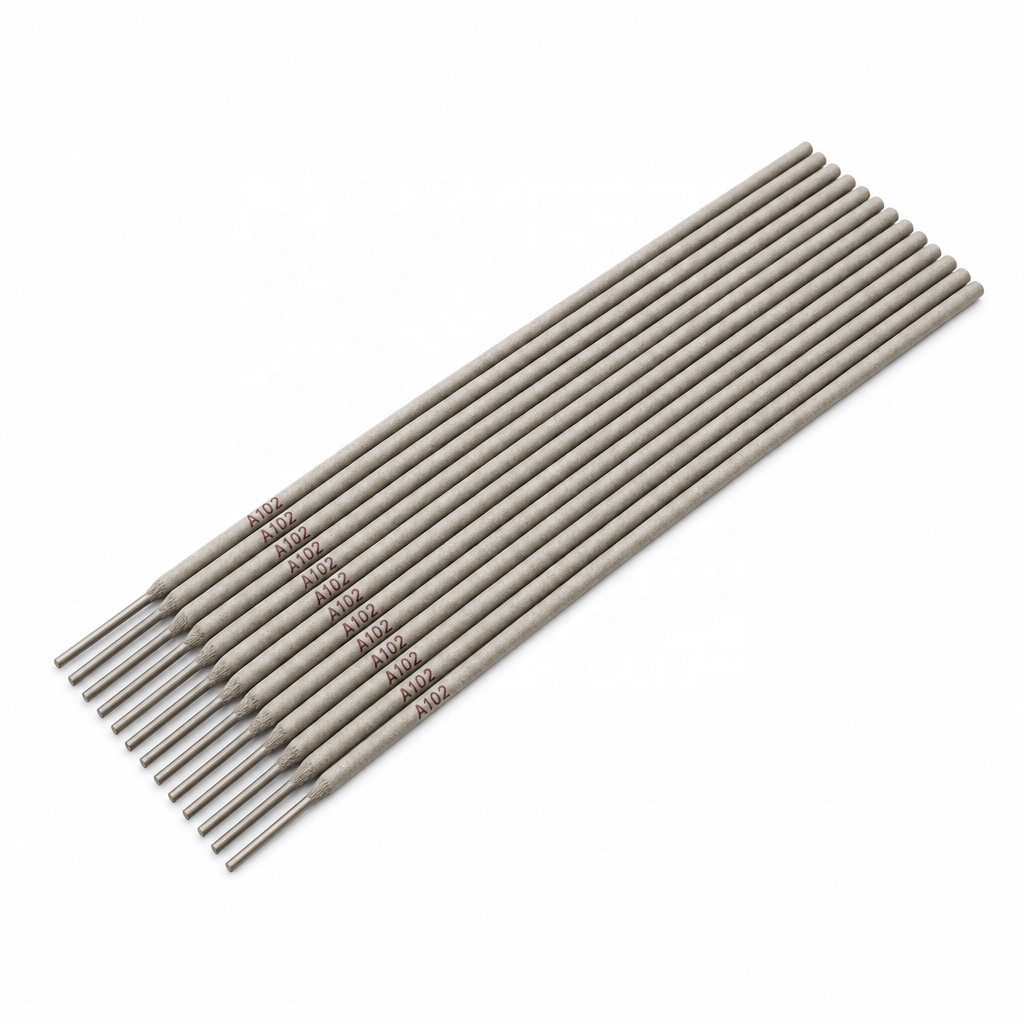
A102 Stainless Steel Welding Electrode
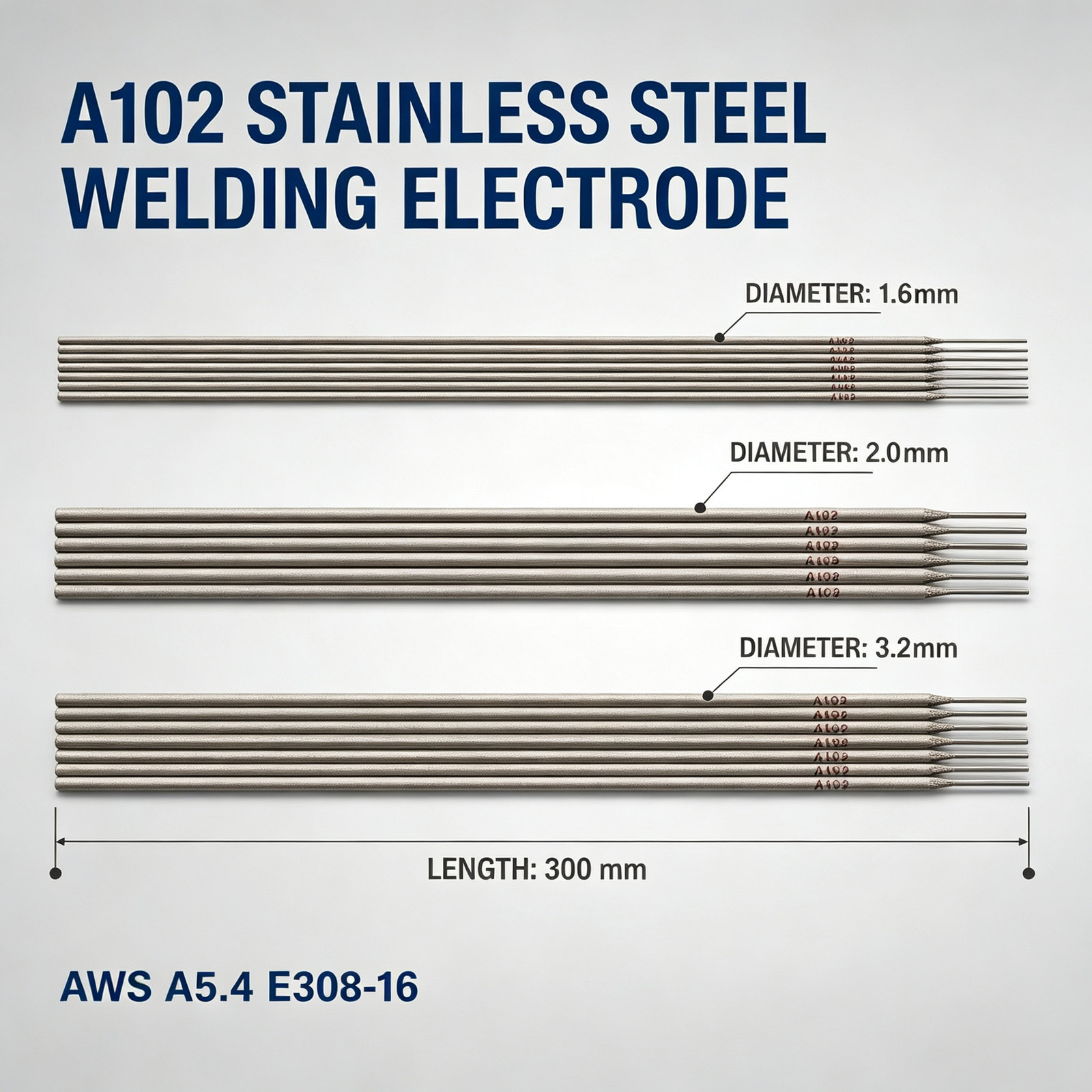
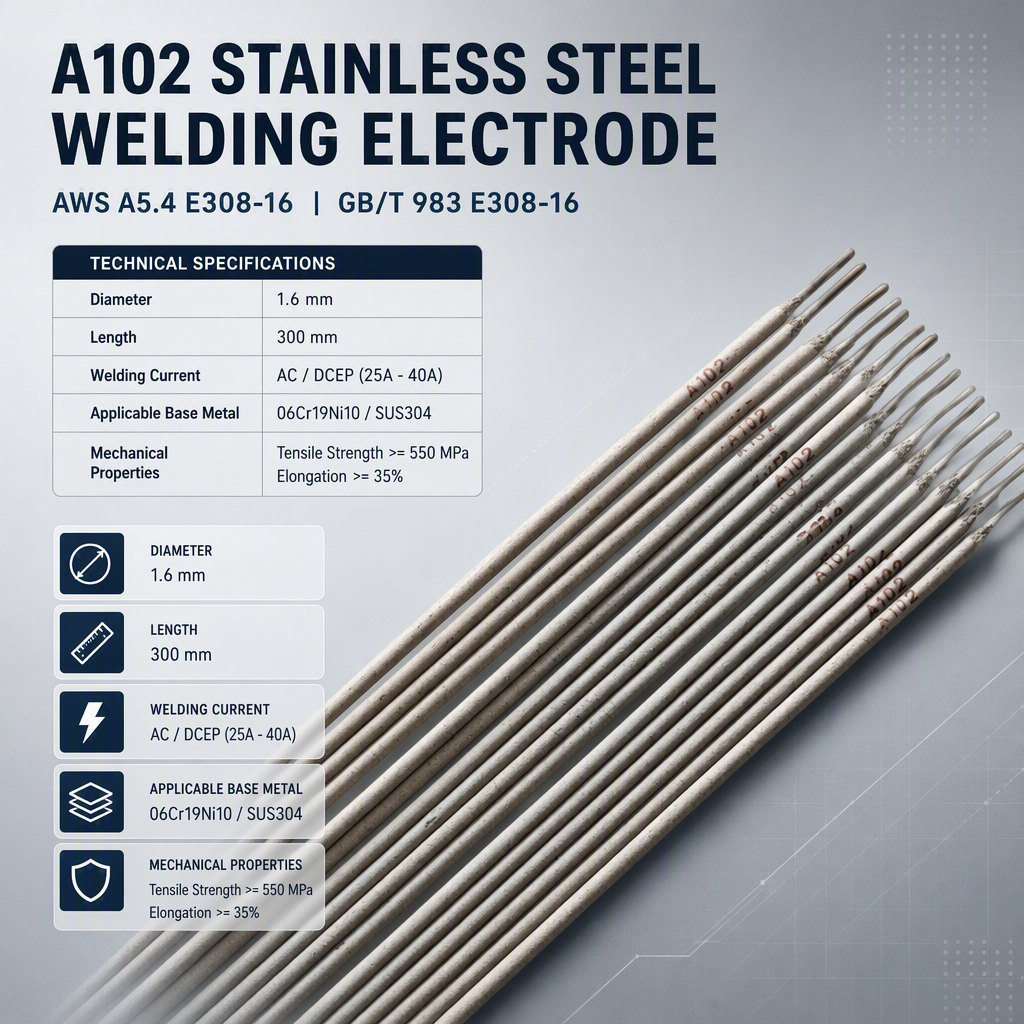
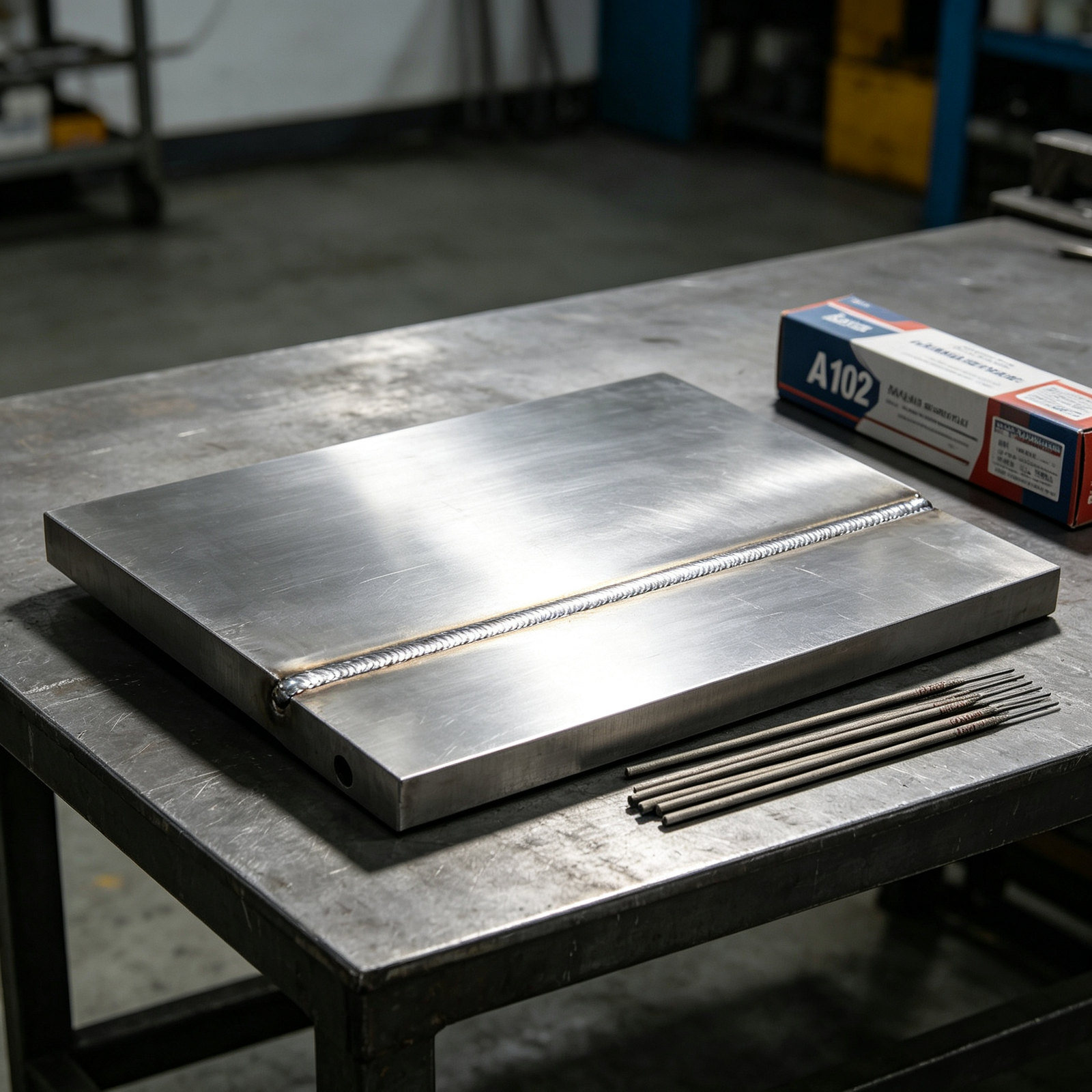
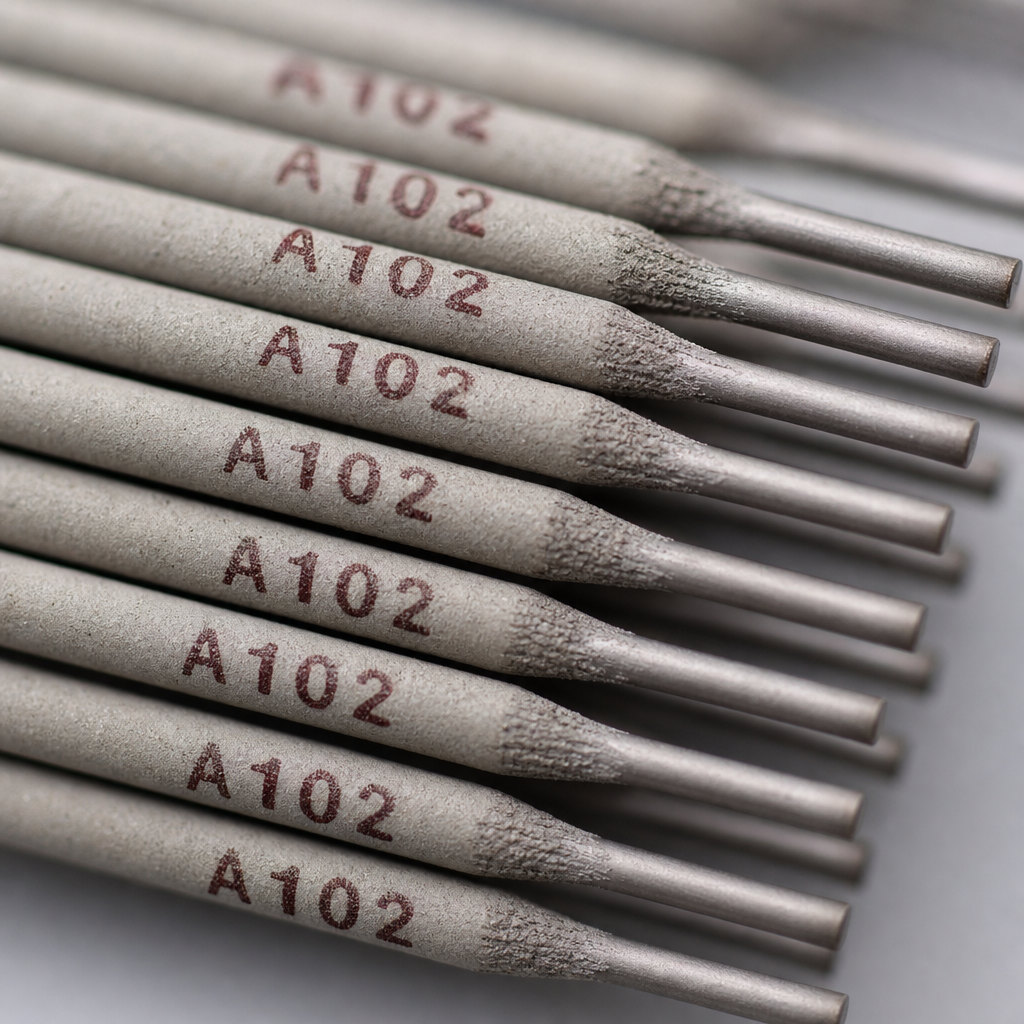
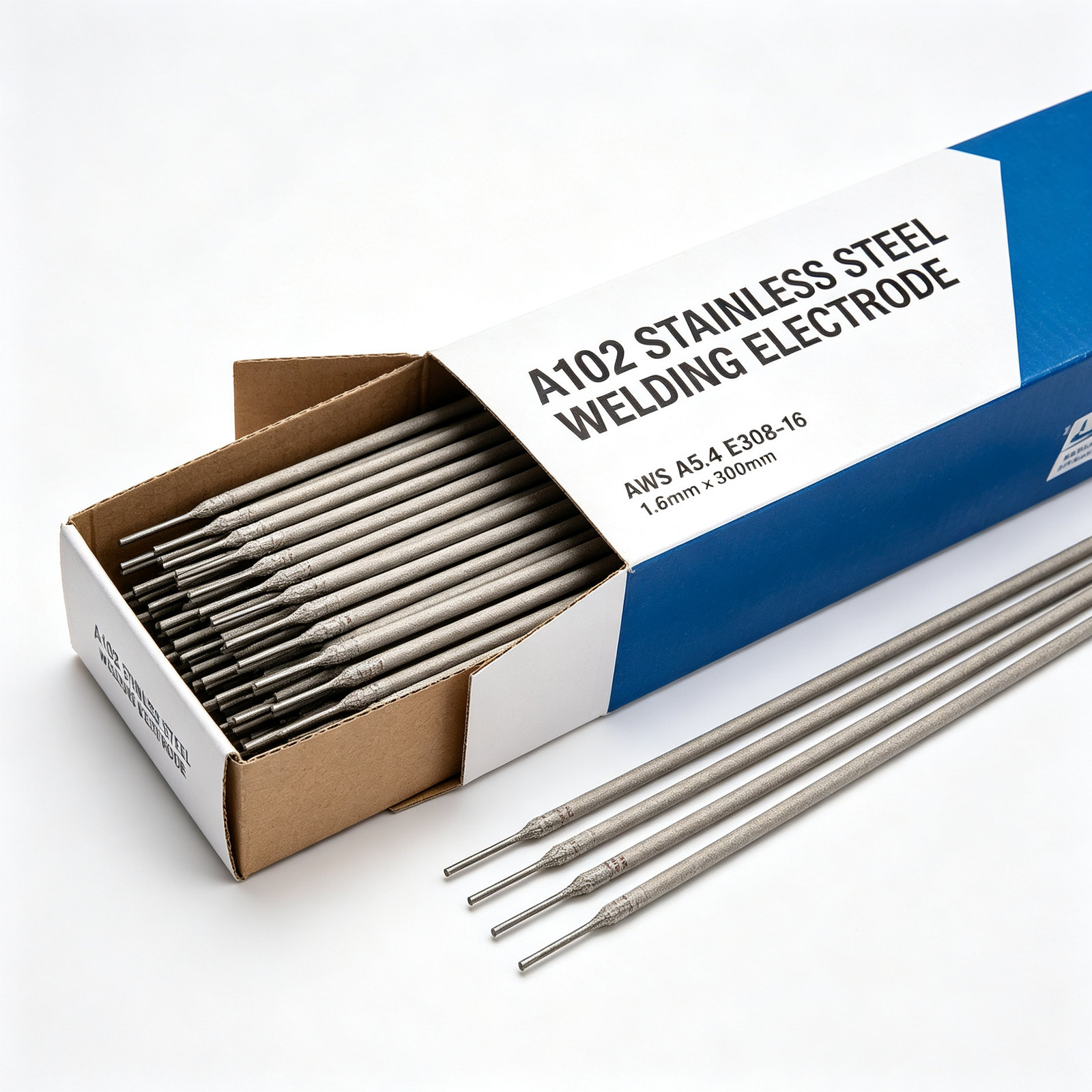
A102 is the Chinese designation for a rutile-coated austenitic stainless steel electrode, and it corresponds to AWS E308-16: the same 18-8 weld metal named by two systems. It welds 304-type stainless, runs on AC or DC, and the catalogue publishes a working range of 40 A to 110 A. Stainless covered electrodes in the GB system sit under GB/T 983.
Status
Datasheet available on request
Description
Rutile stainless steel electrode (GB A102).
Welding positions, current range, deposition data and procedure notes are provided with the datasheet. Ask us for the grade you are specifying.
- Material
- Stainless Steel
- Welding current
- 40-110A
- Selling unit
- Single item
- Single gross weight
- 1.2 kg
- Single package size
- 310.0X280.0X20.0 cm
Lead time
- 1 - 200
- 31 days
Is A102 the same as E308-16?
Yes. A102 is the Chinese designation and E308-16 is the AWS designation for the same 18-8 austenitic stainless weld metal. Stainless covered electrodes in the GB system sit under GB/T 983 and the AWS equivalent is A5.4. Order the designation your drawing names, because the two are certified against different documents.
What welding current does A102 run at?
The published range for this grade is 40 A to 110 A. The low end suits small diameters and thin sheet, where stainless distorts before it lacks fusion; the top end is for filling on heavier section. Actual setting depends on the diameter you order, so ask for the datasheet with the quotation.
What stainless steel can A102 weld?
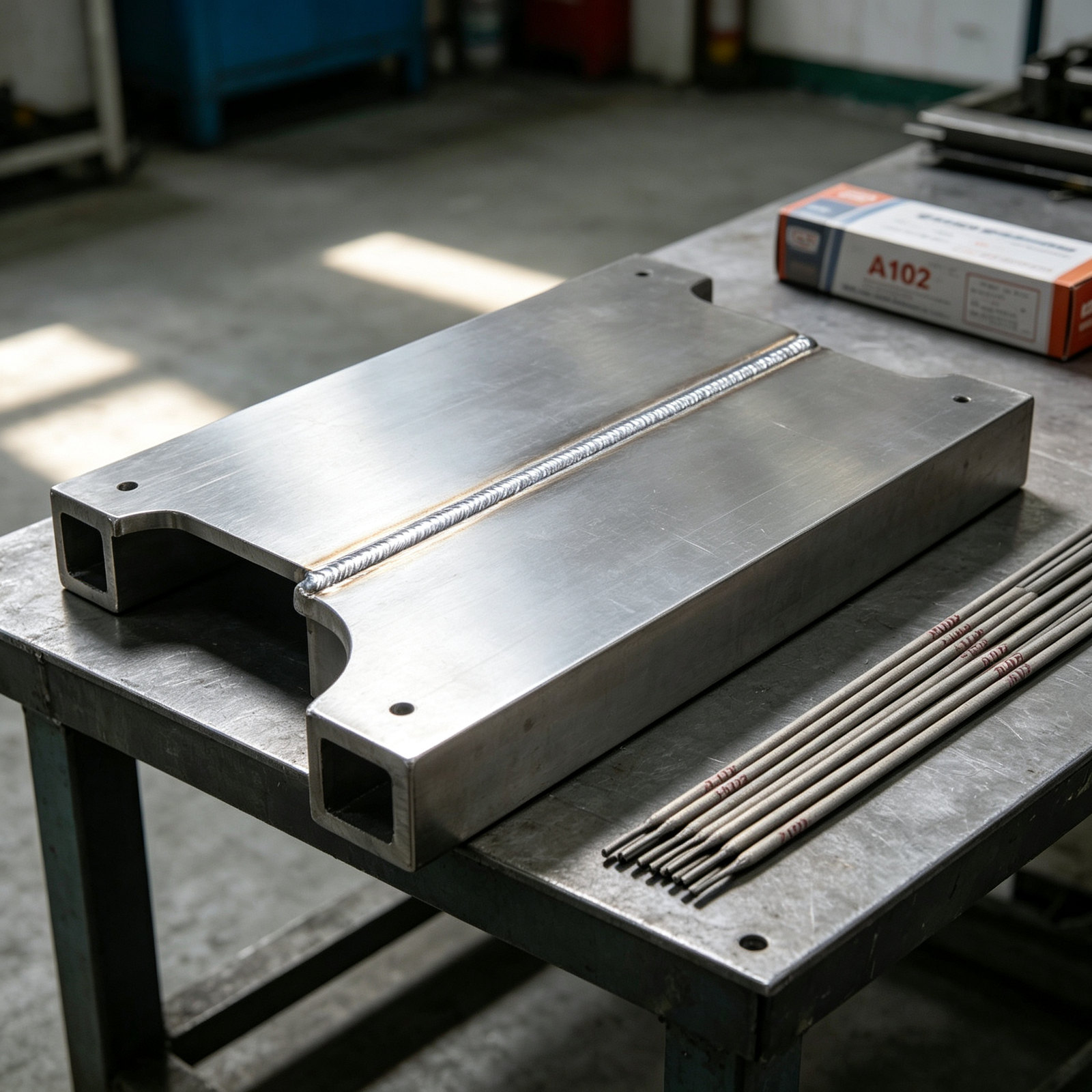
18-8 austenitic stainless, the 304 and 304L family: food processing and catering equipment, thin-gauge ducting, architectural metalwork and tanks. It is a general fabrication grade rather than a chemical-service one, and it is not intended for 316, which needs the molybdenum that an 18-8 deposit does not carry.
Can A102 be used on 316 stainless?
It will run, and the weld will be the wrong alloy. A102 deposits 18-8 weld metal without molybdenum, so on 316 plate the weld becomes the least corrosion-resistant part of the assembly. That plate needs E316L-16. Matching the alloy family comes before any question about the designation.
A102 Stainless Steel Welding Electrode
What A102 is
A102 is the Chinese designation for a rutile-coated austenitic stainless steel covered electrode, used to weld 18-8 stainless steel such as 304. The coating is a titania-calcium type, which is what makes the electrode run on alternating current as well as direct current, and gives the smooth, easily cleaned bead that stainless work is judged on.
The published working current for this grade is 40 A to 110 A. That is a wide band and it is deliberate: the low end covers small diameters and thin sheet, where a stainless weld will distort or sugarburn long before it lacks fusion, and the top end covers filling on heavier section.
A102 and E308-16 are the same grade under two systems
This is the question most buyers arrive with, so it is worth stating plainly: A102 corresponds to E308-16. The Chinese designation system and the AWS system name the same 18-8 stainless weld metal by different rules. Stainless covered electrodes in the GB system sit under GB/T 983; the AWS equivalent is A5.4.
In practice the designation on the drawing decides. A drawing written to a Chinese standard says A102. A drawing written to AWS says E308-16. The two are ordered and certified against different documents even when the deposit is the same, so name the standard your drawing calls for and let the certificate follow it. If a supplier proposes one as a straight substitute for the other, that is a decision for whoever wrote the drawing, not for the supplier.
One distinction that is not a matter of naming: if the specification asks for a carbon limit on the deposit, that is the L grade — E308L-16 — and A102 is not it. The carbon requirement is a real metallurgical difference, not a translation of the same grade into another language.
Where A102 is specified
- Food processing and catering equipment, where the material is 304 or 304L and the weld has to clean up to the same standard as the plate.
- Thin-gauge ducting, panels and architectural metalwork in 18-8 stainless.
- Tanks, vessels and pipework where the drawing names the GB designation rather than the AWS one.
- General stainless repair work, where the electrode has to strike and re-strike easily on whatever machine is available.
- Not for 316. The molybdenum that gives 316 its resistance to chlorides is not in an 18-8 deposit, so welding 316 with A102 leaves the weld as the least resistant part of the assembly.
Stainless discipline, which matters more than the electrode
Most of the stainless defects that get blamed on the electrode are contamination or heat. Keep a wire brush and a grinding wheel that are used on stainless only: a brush that has previously run over carbon steel embeds free iron in the surface, and that iron rusts within days. Keep the heat input lower than you would use on carbon steel of the same thickness, because stainless distorts more and conducts heat away less readily. And if the surface finish is visible, pickle or passivate the weld afterwards — welding disrupts the passive layer, and nothing about the electrode restores it.
Other grades in this family
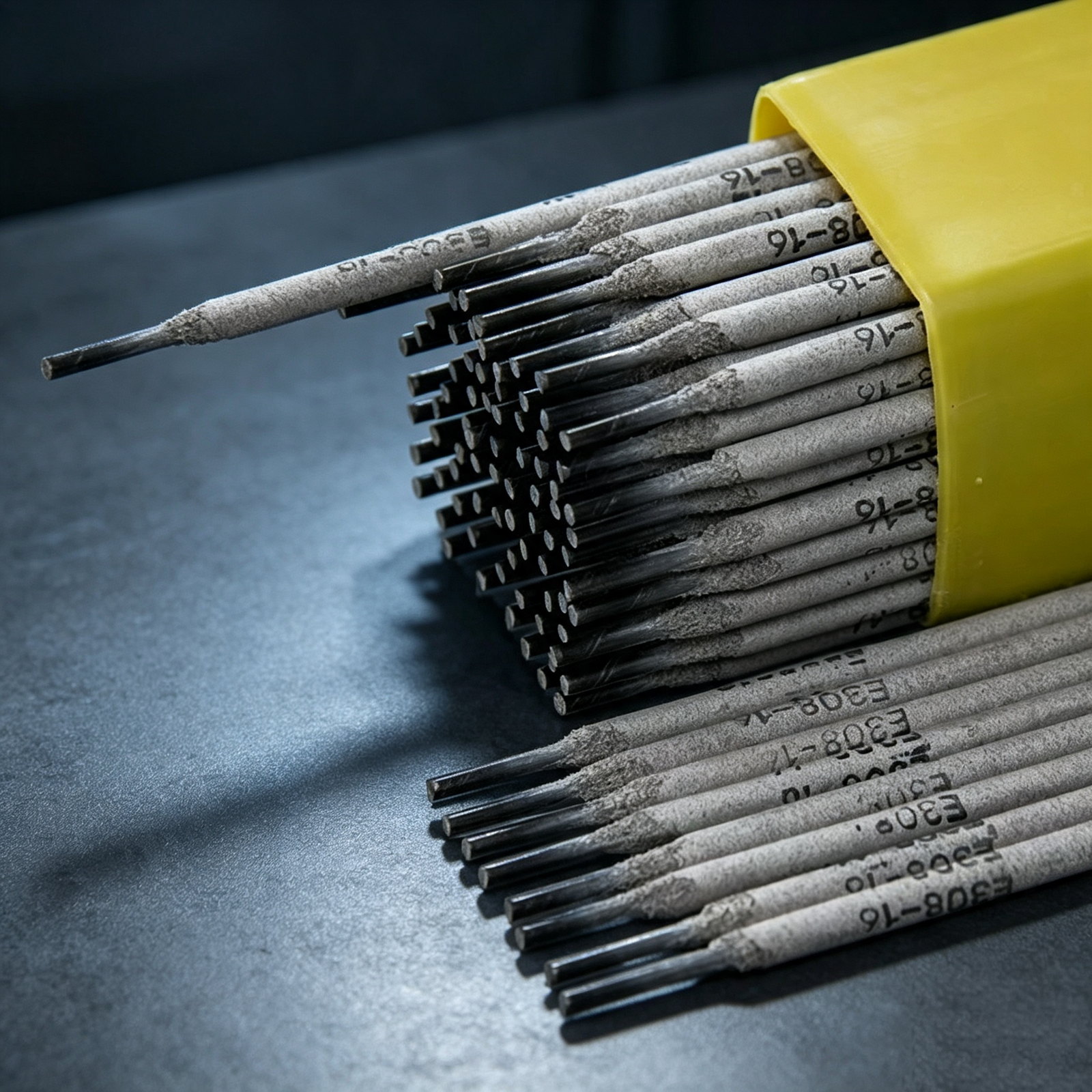
E308-16 Stainless Steel Welding Electrode
Rutile stainless steel electrode.
View grade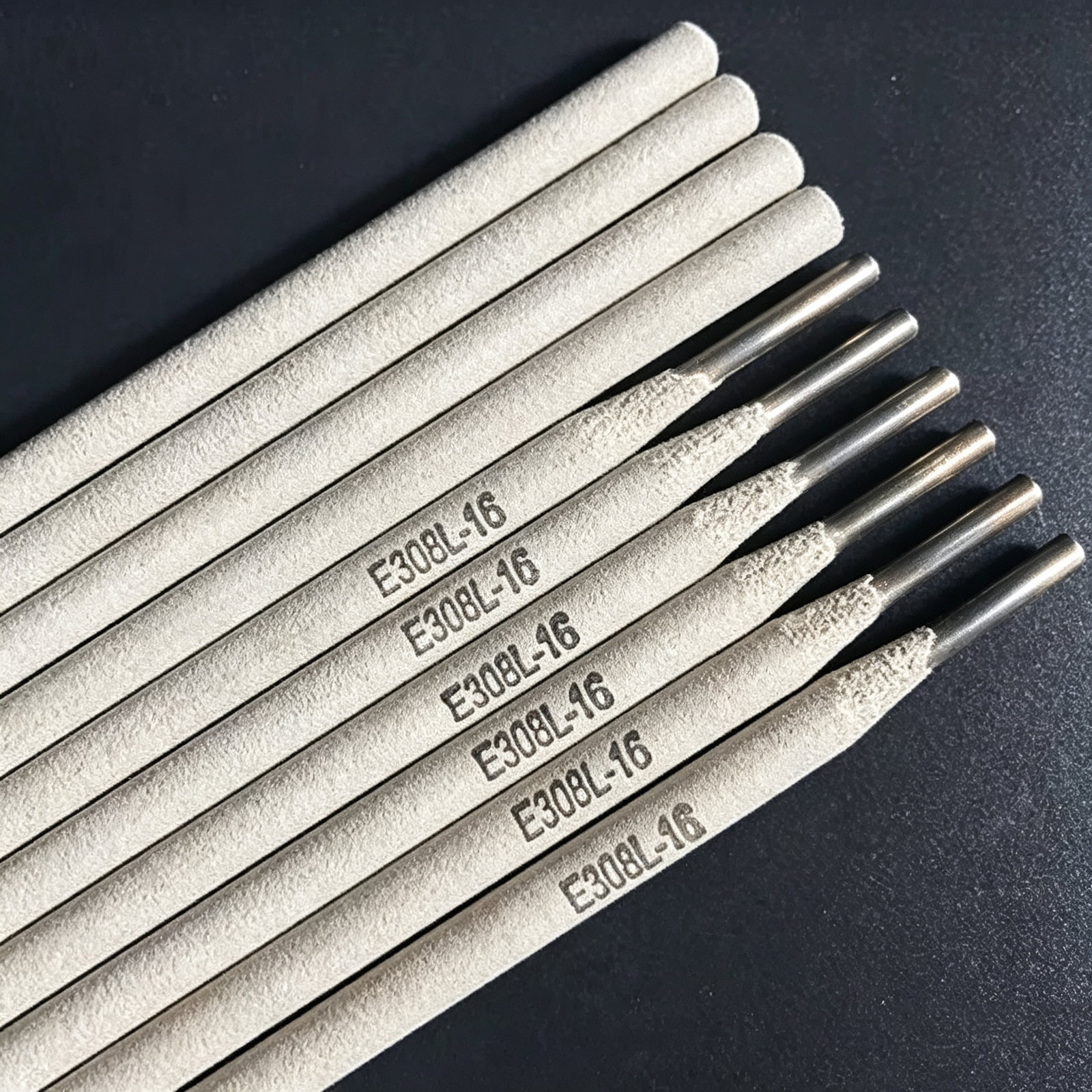
E308L-16 Low-Carbon Stainless Steel Electrode
Low-carbon rutile stainless steel electrode.
View grade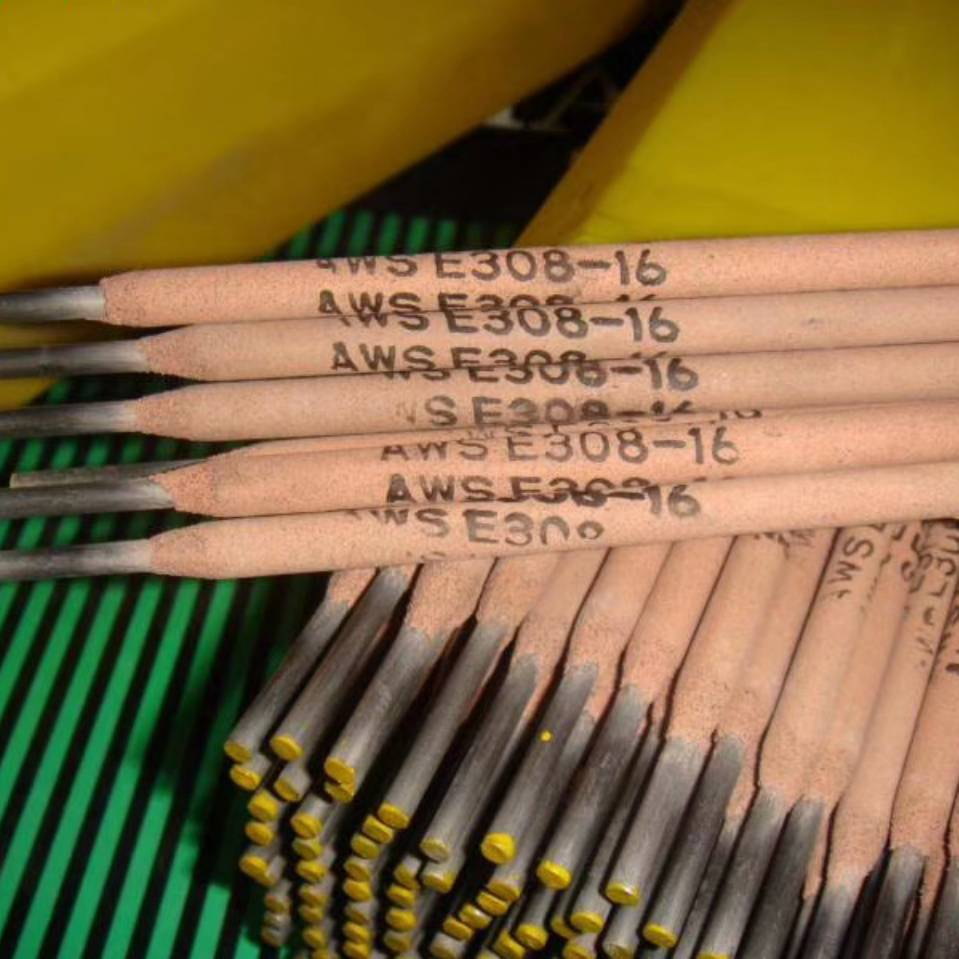
E316L-16 Low-Carbon Stainless Steel Electrode
Low-carbon molybdenum-bearing rutile stainless steel electrode.
View grade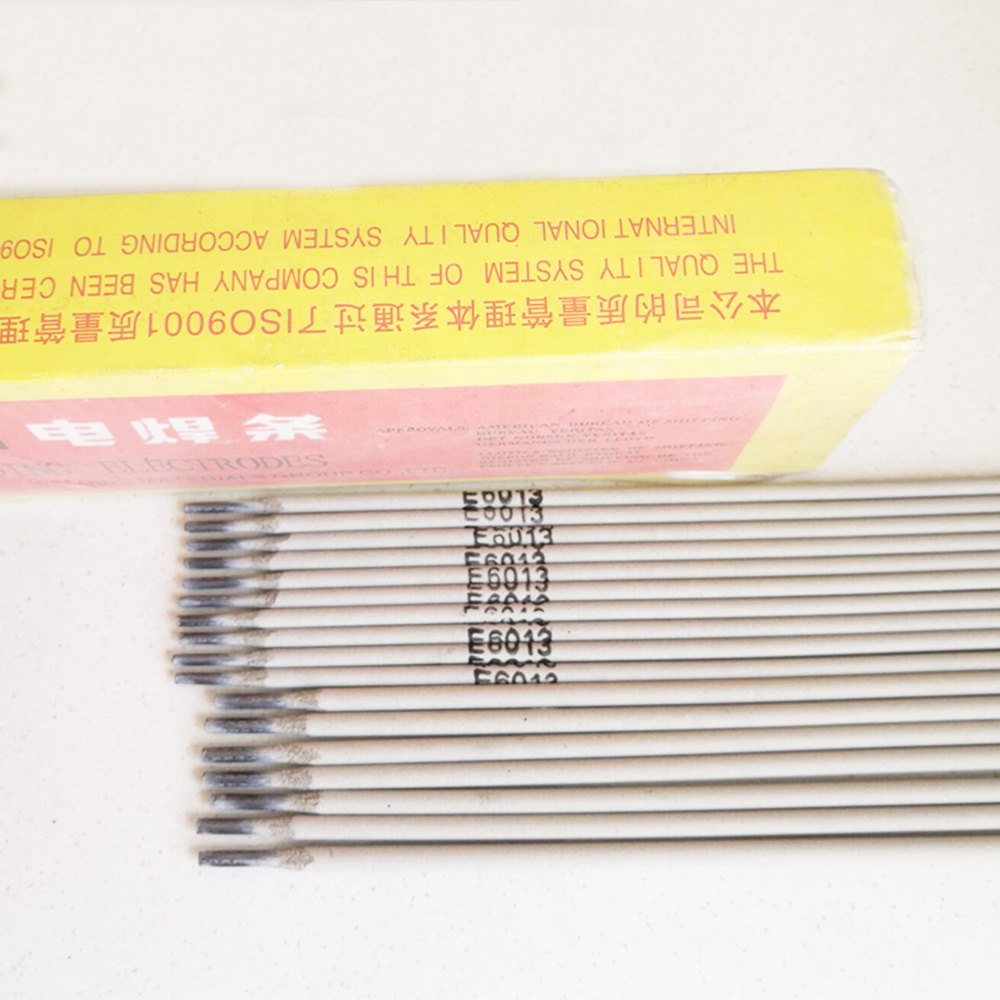
E4043 Aluminium Welding Electrode
Aluminium alloy electrode.
View gradeE410NiMo-16 Martensitic Stainless Steel Electrode
Martensitic stainless steel electrode.
View grade
E4211 Cellulosic Welding Electrode
Cellulosic electrode supplied under the E4211 designation.
View grade