
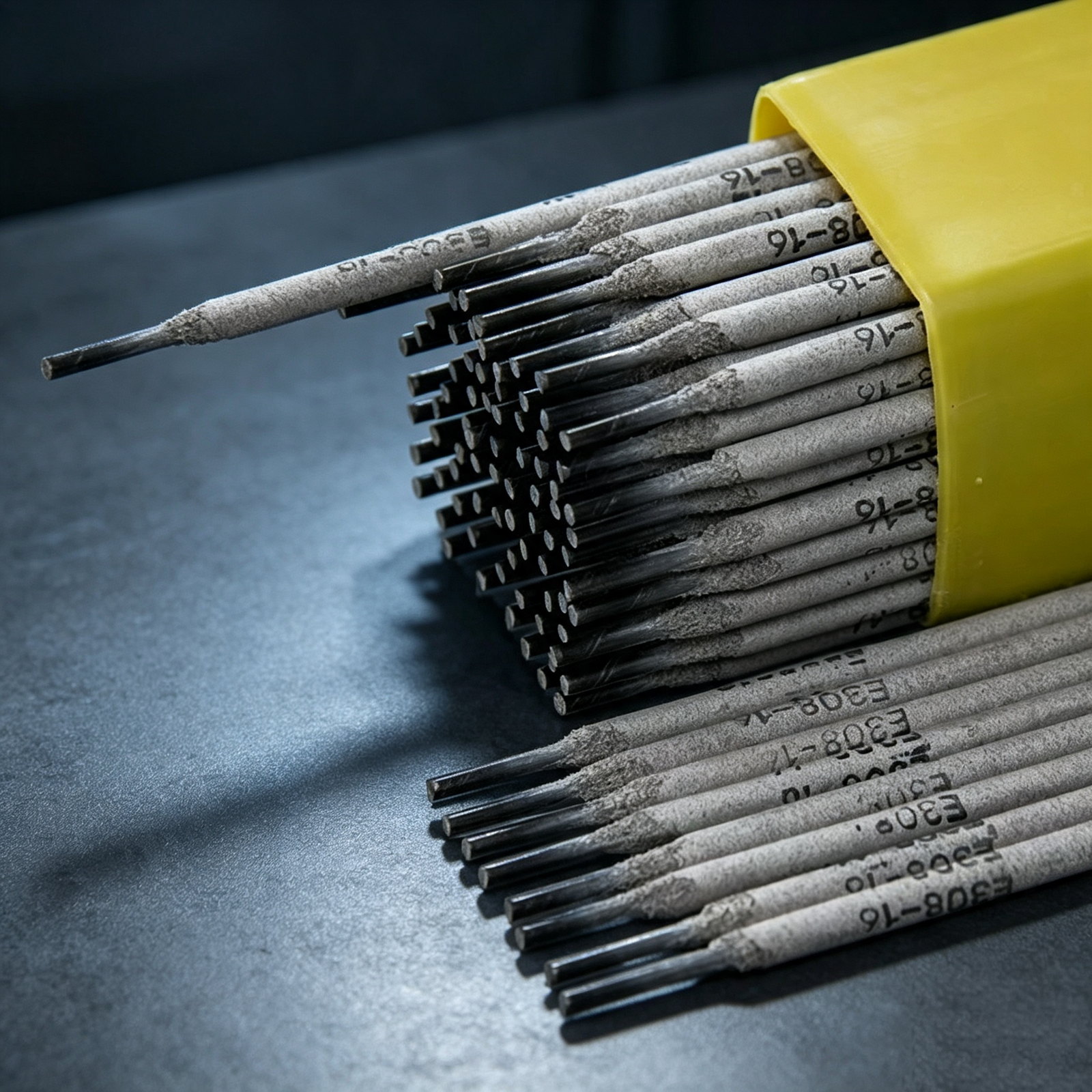
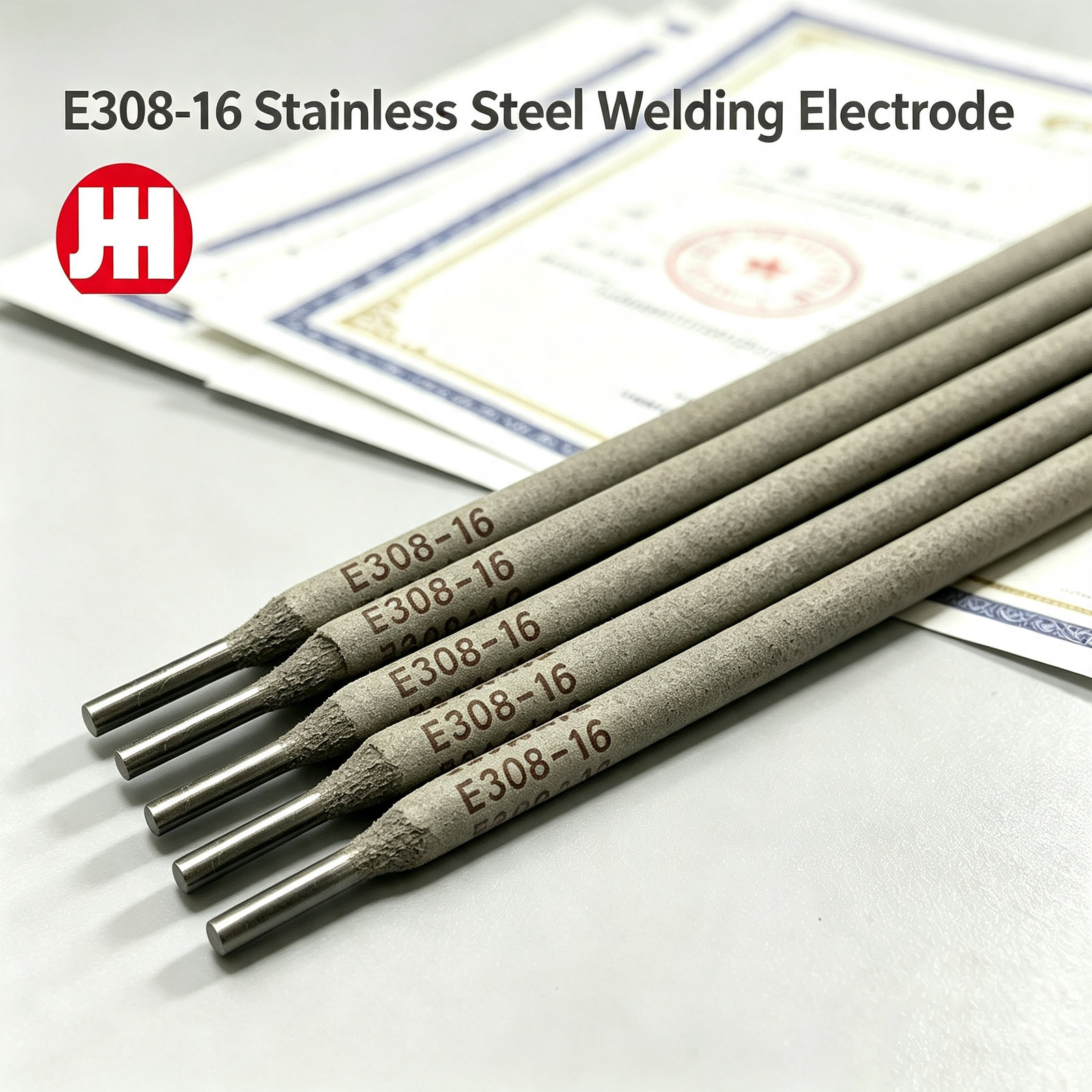
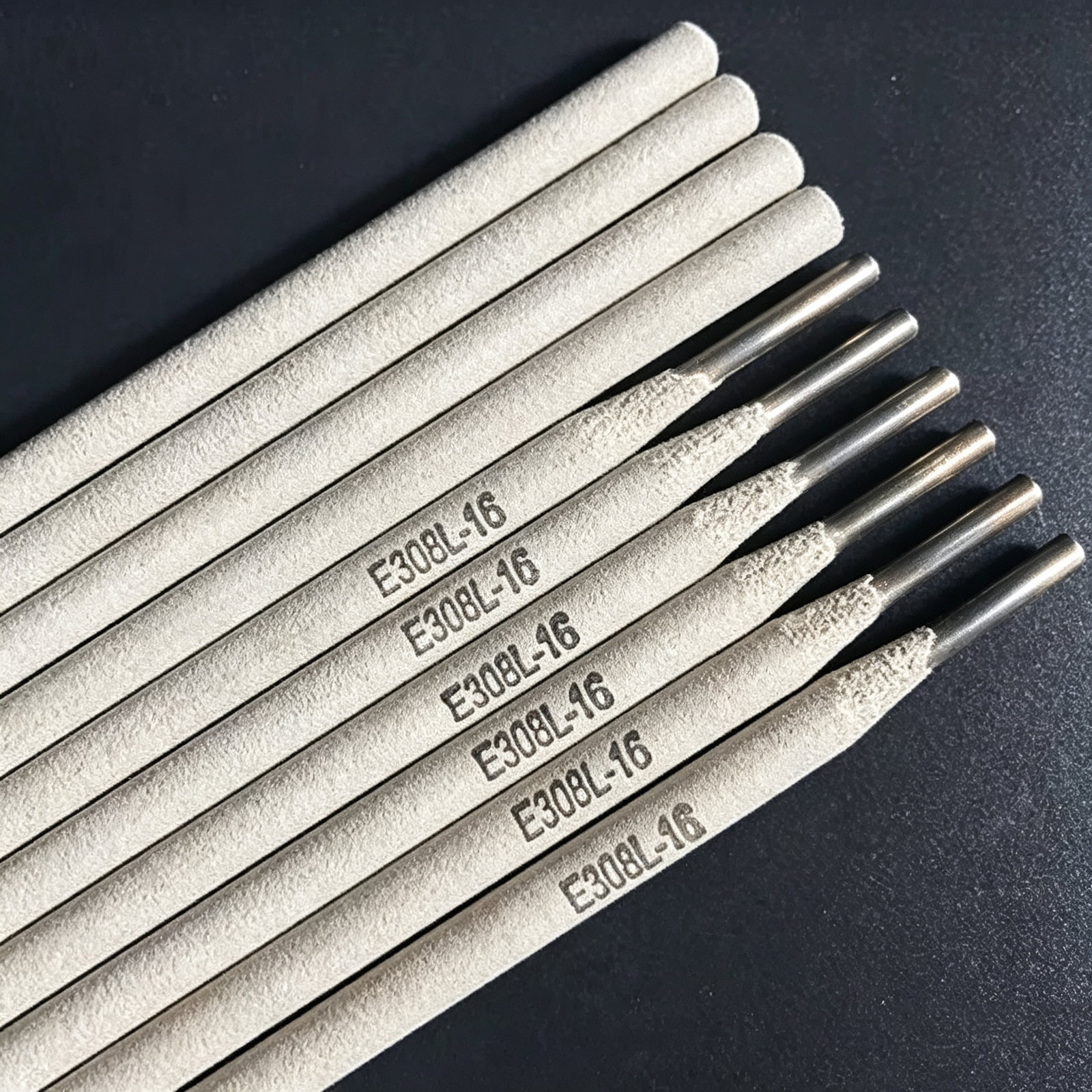
E308-16 Stainless Steel Welding Electrode
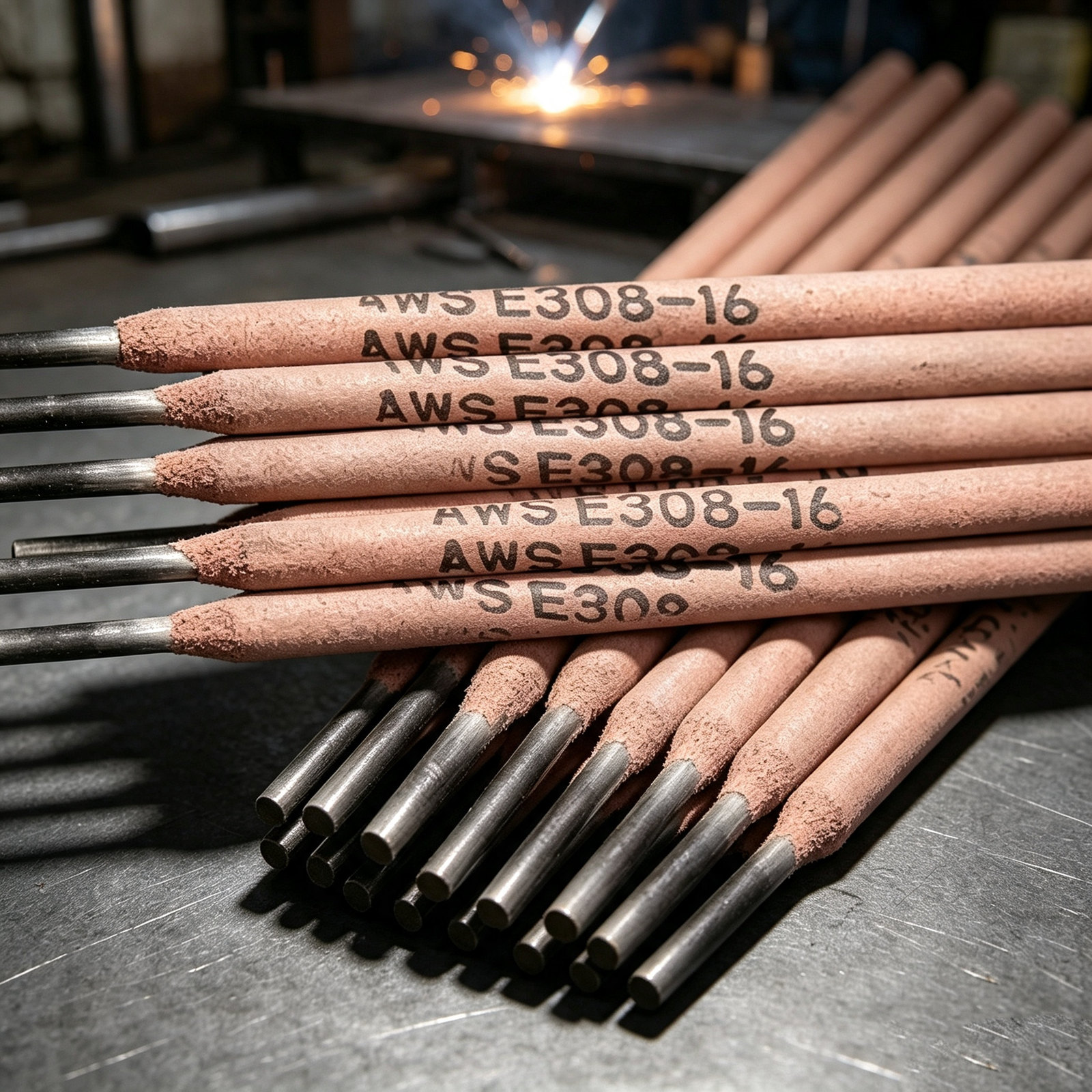
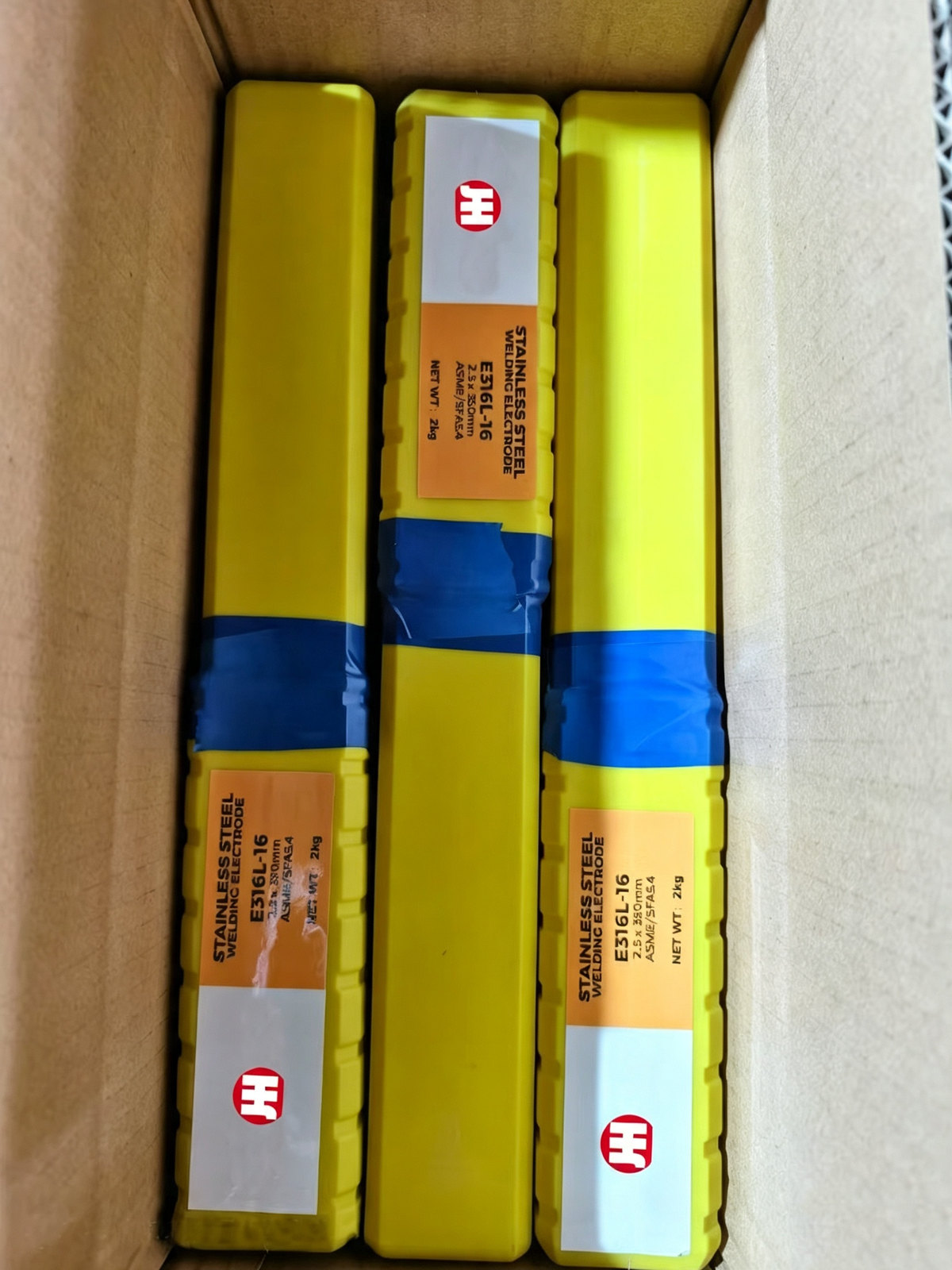
E308-16 is a rutile-coated stainless steel electrode supplied to AWS A5.4, welding 18-8 austenitic stainless steel such as 304. It runs on AC or DC, and the "16" in the designation states a rutile coating that will work on AC — the reason it is the default stainless electrode where only AC plant is on site. It is supplied for stainless steel welding.
Status
Datasheet available on request
Description
Rutile stainless steel electrode.
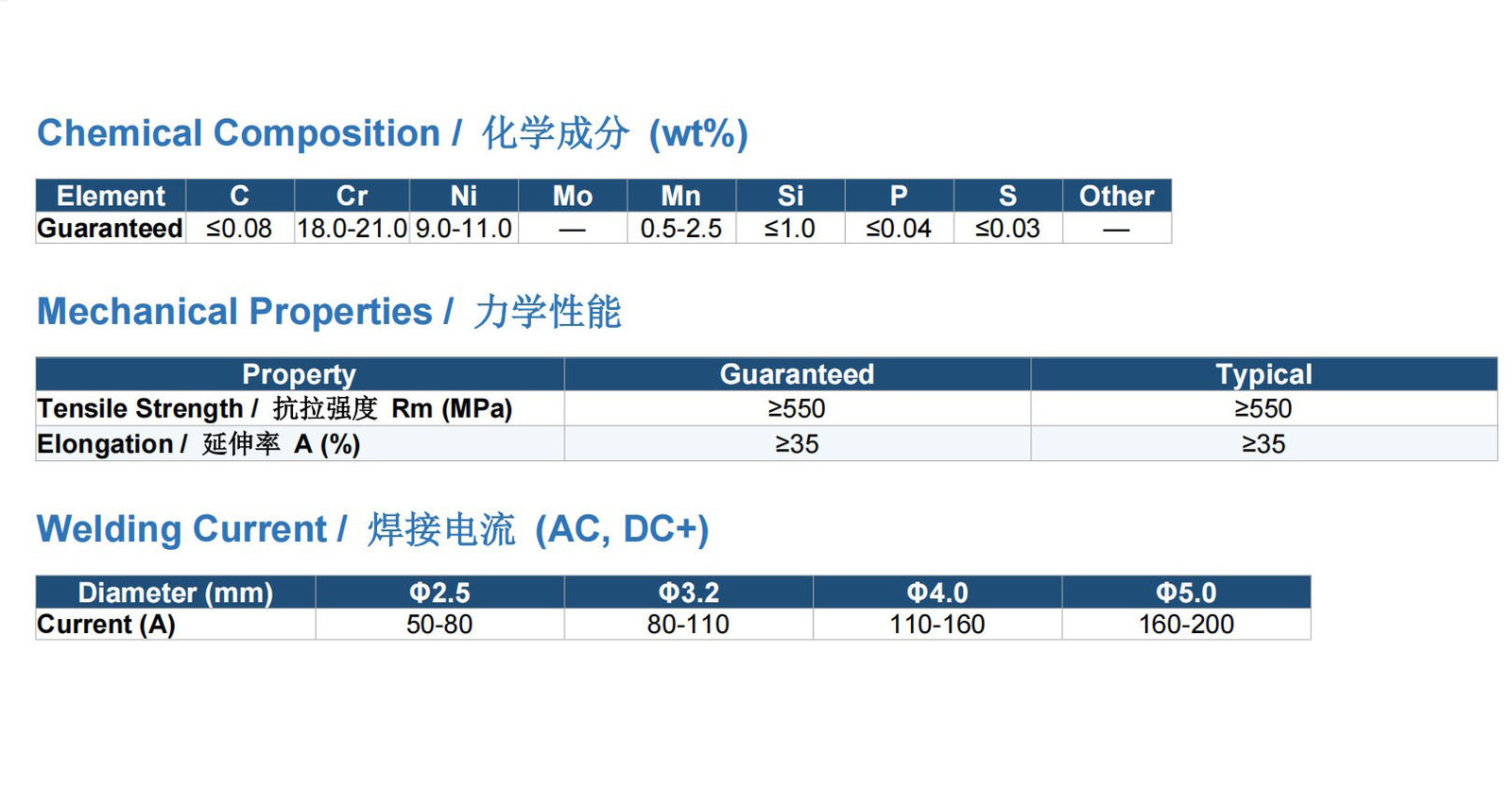
Welding positions, current range, deposition data and procedure notes are provided with the datasheet. Ask us for the grade you are specifying.
- Material
- Stainless Steel
- Form / model
- Stick
- Standard
- AWS A5.4 E308-16
- Application
- Stainless Steel Welding
- Welding current
- AC, DC
- Operating temperature
- 300°C(540℉)
- Selling unit
- Single item
- Single gross weight
- 1.050 kg
- Single package size
- 40X8X8 cm
Lead time
- 1 - 3,000
- 15 days
- 3,001 - 5,000
- 30 days
- > 5,000
- To be negotiated days
What is E308-16 welding electrode used for?
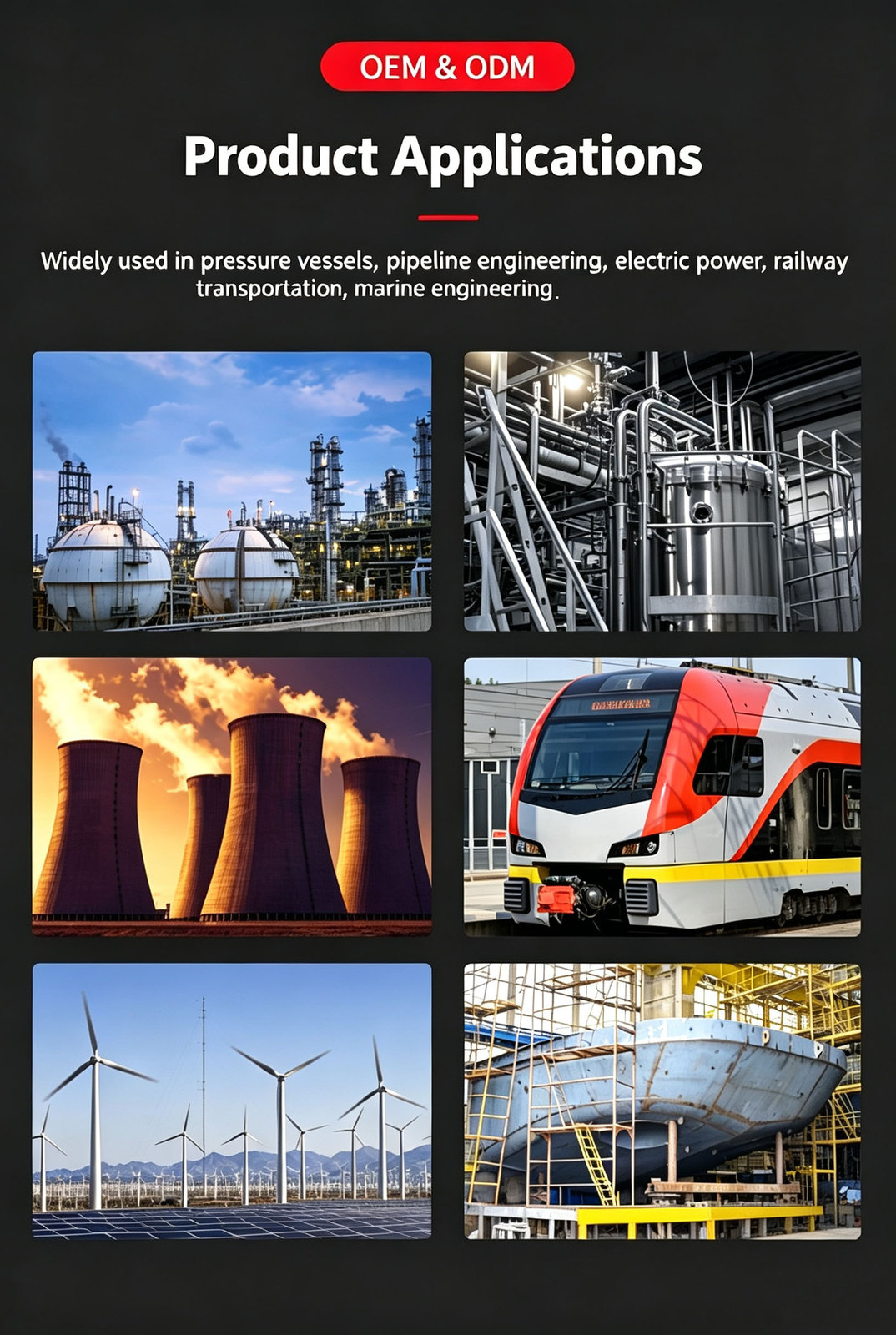
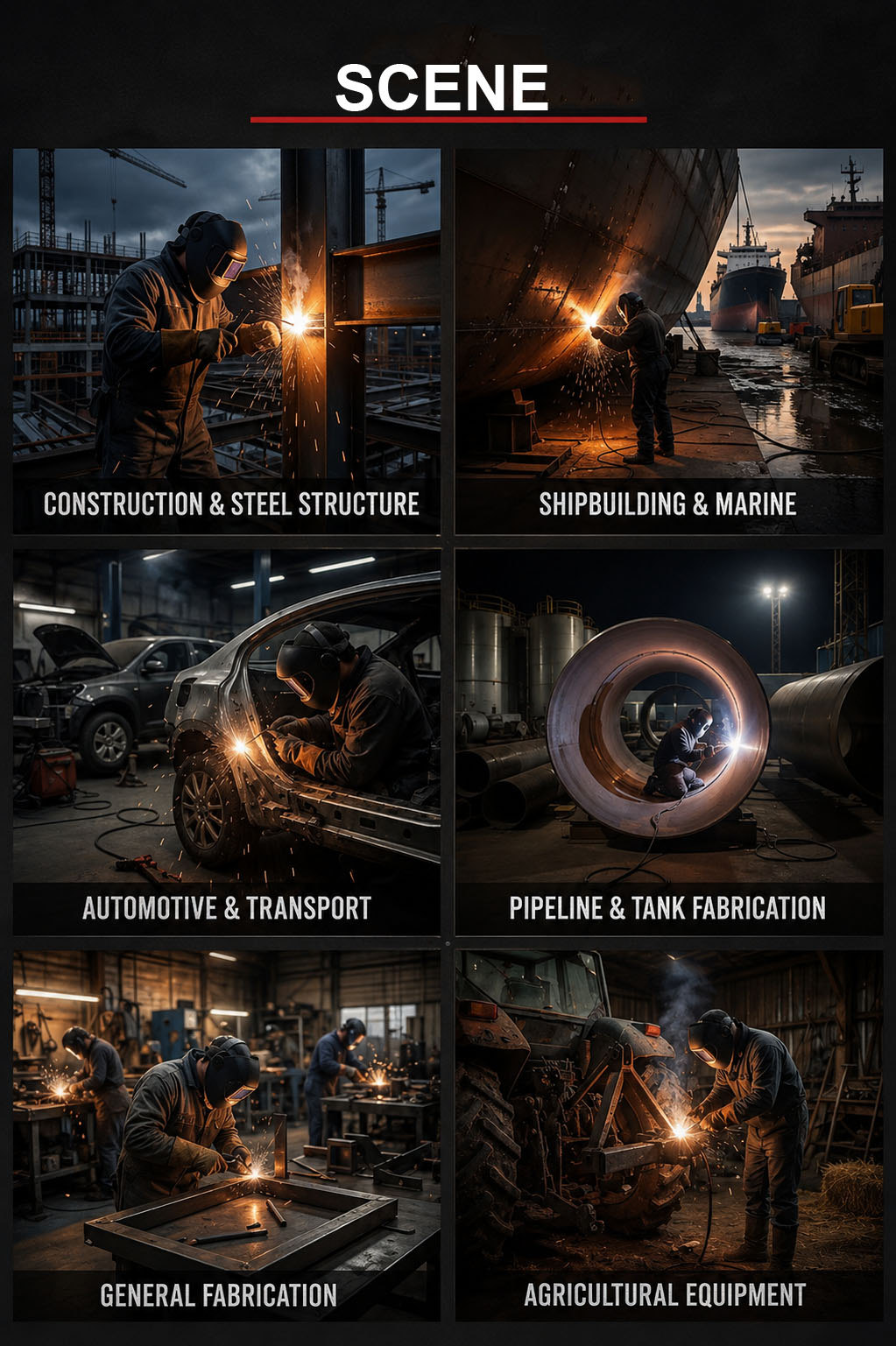
E308-16 (also known as A102 in the Chinese GB standard) is a lime-titania coated stainless steel electrode for welding 18Cr-8Ni austenitic stainless steels primarily AISI 304, 304L, 301, 302, and 305. It is widely used in food processing equipment, chemical piping, pharmaceutical vessels, brewery tanks, architectural stainless steel, and pressure vessel fabrication where corrosion resistance is critical.
What is the difference between E308-16 and E6013?
They serve completely different base metals. E6013 is a carbon steel electrode for mild steel welding. E308-16 is a stainless steel electrode for 304-series stainless steel. Using E6013 on stainless steel will cause rust at the weld joint. Using E308-16 on carbon steel is unnecessarily costly. Match the electrode to your base metal never mix them across material types.
What's the difference between E308-16 and E308L-16 ?
E308-16 has a maximum carbon content of 0.08%. The "L" variant (E308L-16) has ≤0.04% carbon. The lower carbon reduces the risk of intergranular corrosion (carbide precipitation at grain boundaries) , especially important for multi-pass welds on thick sections, or for service temperatures above 400°C. For most general-purpose 304 welding, E308-16 performs excellently. If your application requires extra-low carbon, request our E308L-16 variant we manufacture both.
Can E308-16 be used with AC welding machines?
Yes. E308-16 is formulated for both AC and DCEP (DC+) power sources. The lime-titania coating ensures stable arc ignition and re-strike on AC machines. However, for the best bead appearance and arc stability, DCEP is recommended when available.
Why does E308-16 need lower amperage than carbon steel rods?
Stainless steel core wire has higher electrical resistance than carbon steel. At the same amperage, the stainless core heats up faster leading to potential overheating, coating degradation, and unstable arc. Always use the recommended current chart we provide and reduce amperage by 10-20% compared to what you'd use for an equivalent carbon steel rod.
Do you provide chemical composition certificates?
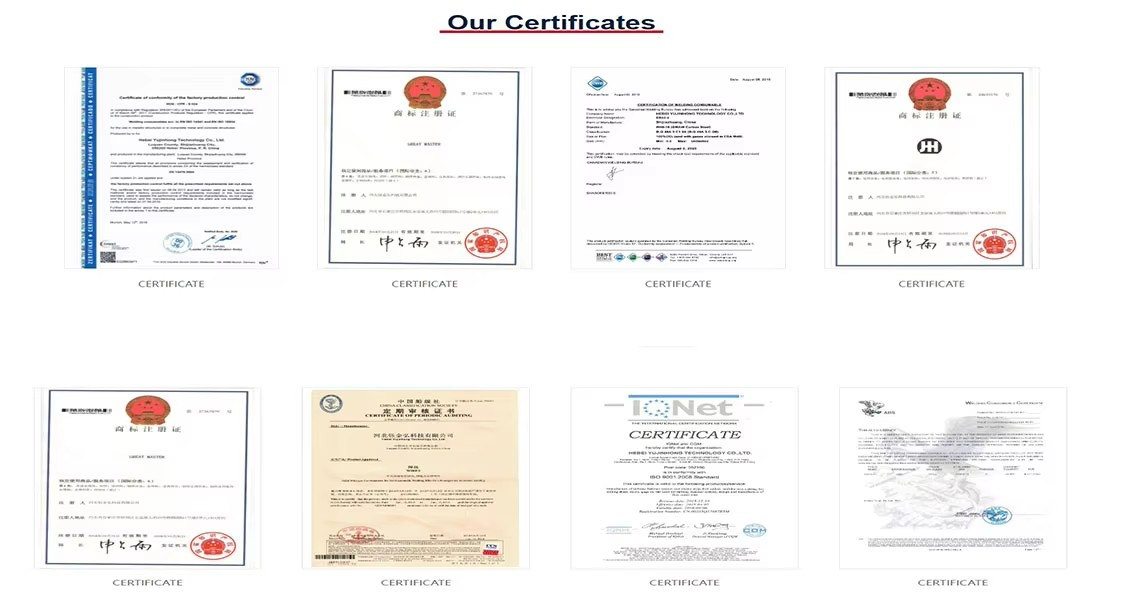
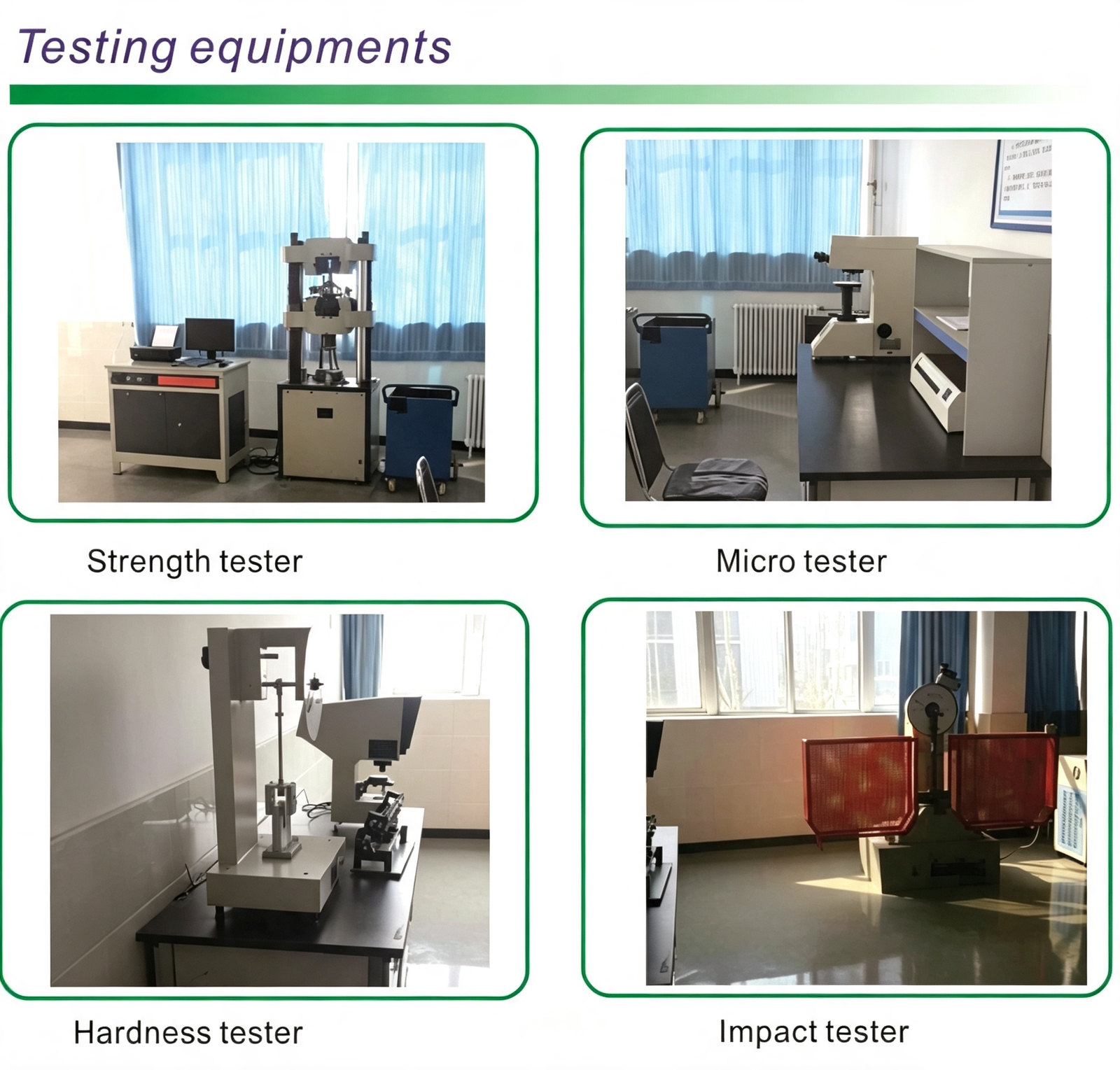
Yes. Every production batch includes an optical emission spectrometer (OES) analysis report showing Cr, Ni, C, Mn, Si, S, P, and Mo content. We also provide ferrite number (FN) measurement per WRC-1992 diagram. MTC (Mill Test Certificate) in EN 10204 3.1 format is available upon request.
How should E308-16 electrodes be stored?
Store in a dry, ventilated area at 5-35°C with relative humidity below 60%. Our vacuum-sealed inner packaging with desiccant protects the coating during transit and short-term storage. Once opened, use within 24 hours or re-dry at 250-300°C for 1 hour before welding. Never expose stainless electrodes to moisture damp coating causes porosity and hydrogen-induced cracking.
E308-16 Stainless Steel Welding Electrode
Reading E308-16
Under AWS A5.4, a covered stainless electrode is designated by its deposited chemistry followed by a suffix that states the coating and the current. E308 is the 18-8 austenitic composition. The -16 suffix means a rutile coating that will run on alternating current as well as direct current.
The -15 suffix, by contrast, is a basic coating intended for direct current. That distinction decides a surprising number of purchases: if the machine is an AC transformer, only the -16 will run, whatever the chemistry says.
The base metal it is for, and the one it is not
E308-16 is the electrode for 18-8 austenitic stainless — the 304 and 304L family. That covers a large share of stainless fabrication: food processing equipment, kitchen and catering equipment, architectural metalwork, tanks and thin-gauge ducting where the material was chosen for appearance and cleanability rather than for chemical service.
It is not the electrode for 316. The molybdenum that gives 316 its resistance to chlorides and to pitting is not in a 308 deposit, so welding 316 plate with E308-16 leaves a weld that is the least resistant part of the assembly. E316L-16 exists for that plate, and the two are not interchangeable in either direction.
What stainless asks of the operator
- Lower heat input than carbon steel of the same thickness. Stainless conducts heat away less readily and distorts more, so a bead that would be comfortable on mild steel can be too hot here.
- Clean tools, kept for stainless only. A wire brush that has been used on carbon steel embeds free iron in the surface, and that iron rusts — a defect that appears days later and is blamed on the electrode.
- No grinding wheel that has touched carbon steel, for the same reason.
- Pickling or passivation after welding if the surface finish matters. Welding disrupts the passive layer, and on visible architectural work that has to be restored rather than left.
Standard or L grade
E308-16 and E308L-16 differ only in the carbon limit on the deposit. The L grade holds carbon to a maximum of 0.03%, which limits chromium carbide precipitation at the grain boundaries during welding, and that precipitation is what makes a weld the first place corrosion appears. Use the L grade where the joint will see corrosive service or cannot be annealed afterwards; use the standard grade where it will not.
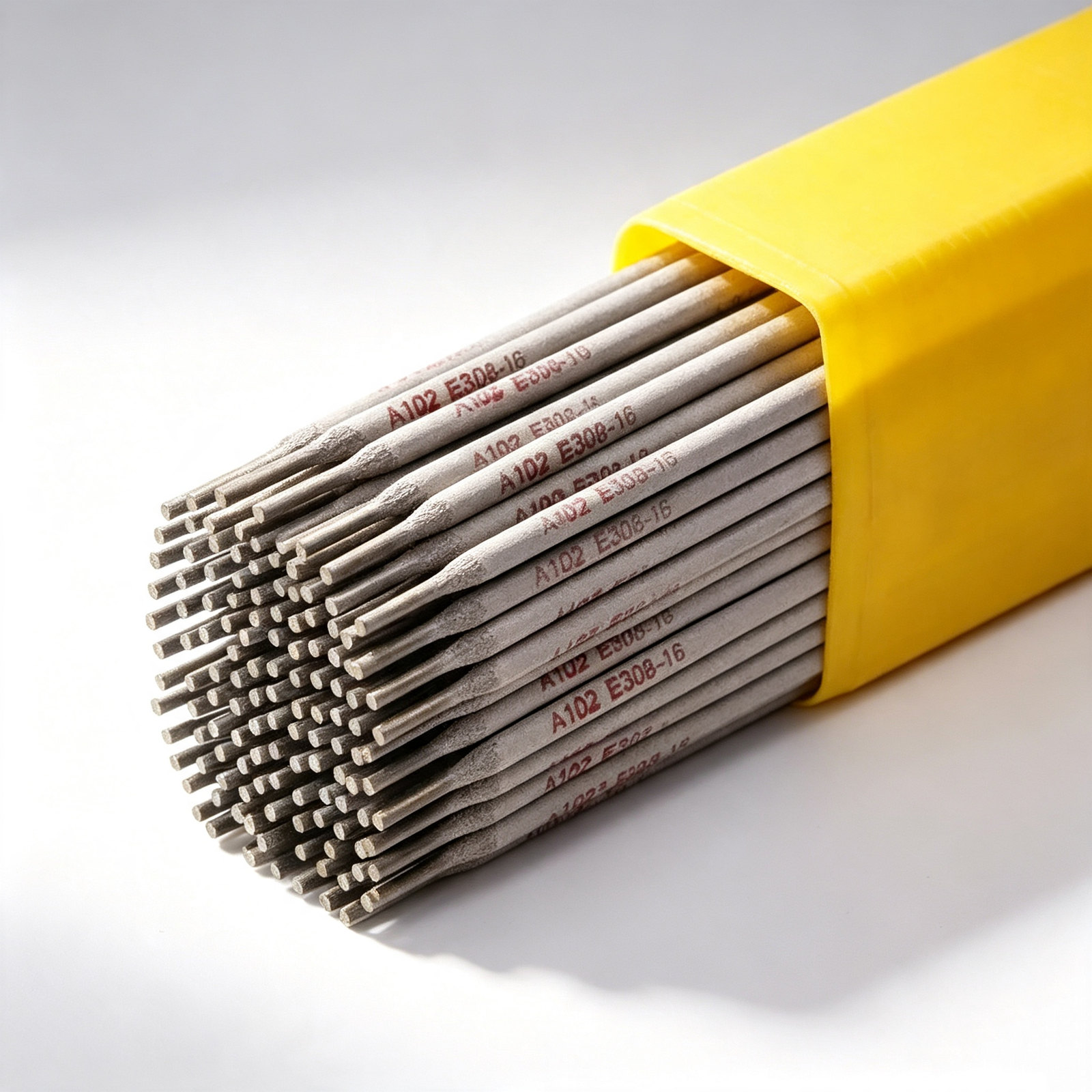
If your drawing says A102
A102 is the Chinese designation for this grade. A drawing written to a Chinese standard names A102 where an AWS drawing names E308-16, and both refer to the same 18-8 stainless weld metal. The designation is fixed by the standard the drawing was written to, and the certificate follows the designation ordered — so if the drawing says A102, order A102 rather than assuming a substitution will be accepted. The A102 page in this catalogue covers that grade under its GB designation.
AWS A5.1, A5.5, A5.4 and A5.9: Which Standard Covers What
Four AWS standards cover most of the welding consumables sold in bulk, and buyers mix them up when they compare quotes. What each one governs, and how to tell from a designation which one applies.
Read the guideE308-16 vs E308L-16: What the L Actually Changes
Same 18-8 stainless, same rutile coating, same AC or DC arc. The only difference is a carbon limit, and it decides whether the weld is still corrosion resistant years later.
Read the guideOther grades in this family
E308L-16 Low-Carbon Stainless Steel Electrode
Low-carbon rutile stainless steel electrode.
View grade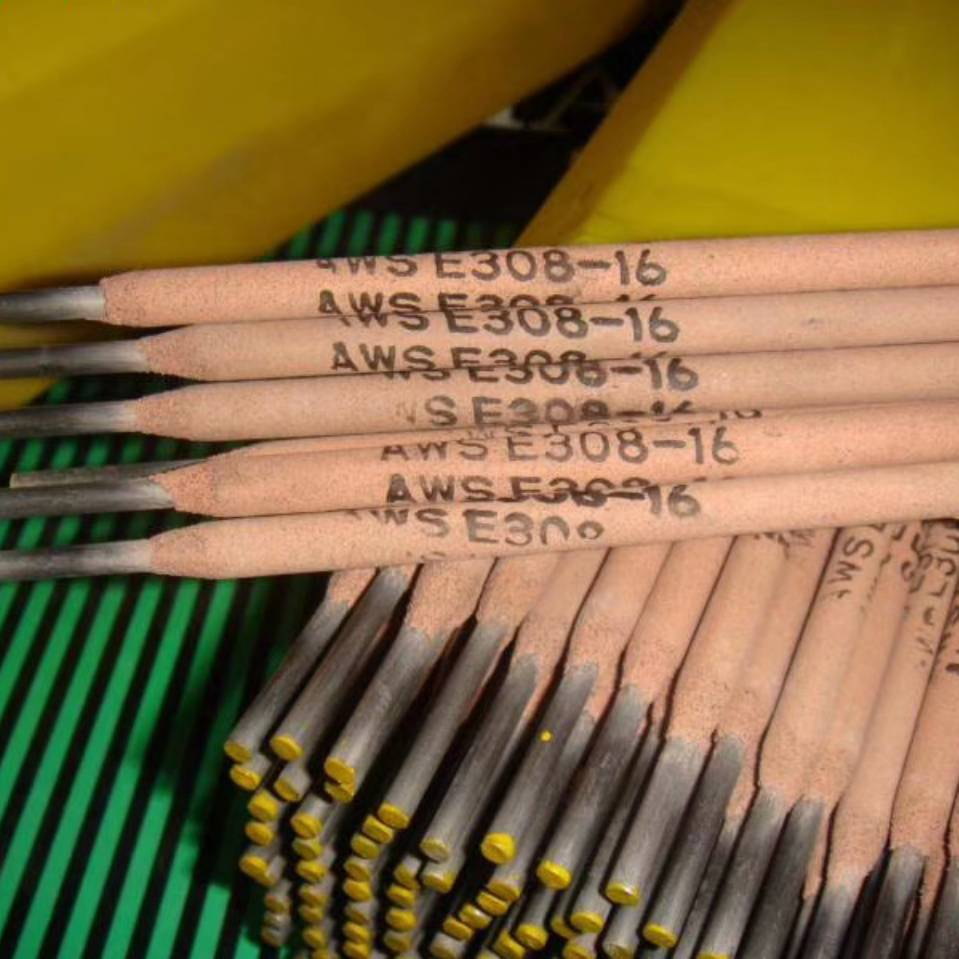
E316L-16 Low-Carbon Stainless Steel Electrode
Low-carbon molybdenum-bearing rutile stainless steel electrode.
View grade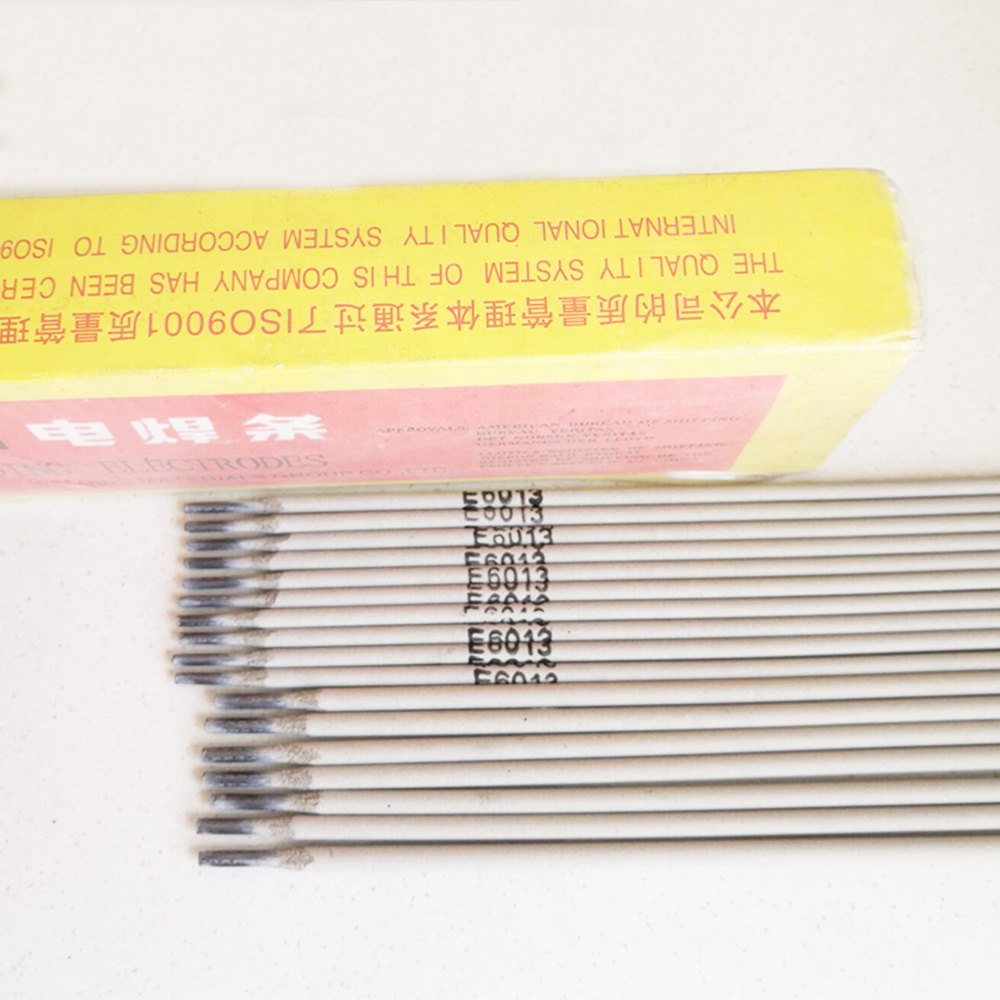
E4043 Aluminium Welding Electrode
Aluminium alloy electrode.
View gradeE410NiMo-16 Martensitic Stainless Steel Electrode
Martensitic stainless steel electrode.
View grade
E4211 Cellulosic Welding Electrode
Cellulosic electrode supplied under the E4211 designation.
View grade
E4313 General Purpose Welding Electrode
General-purpose electrode, GB/T 5117 E4313 designation.
View grade