
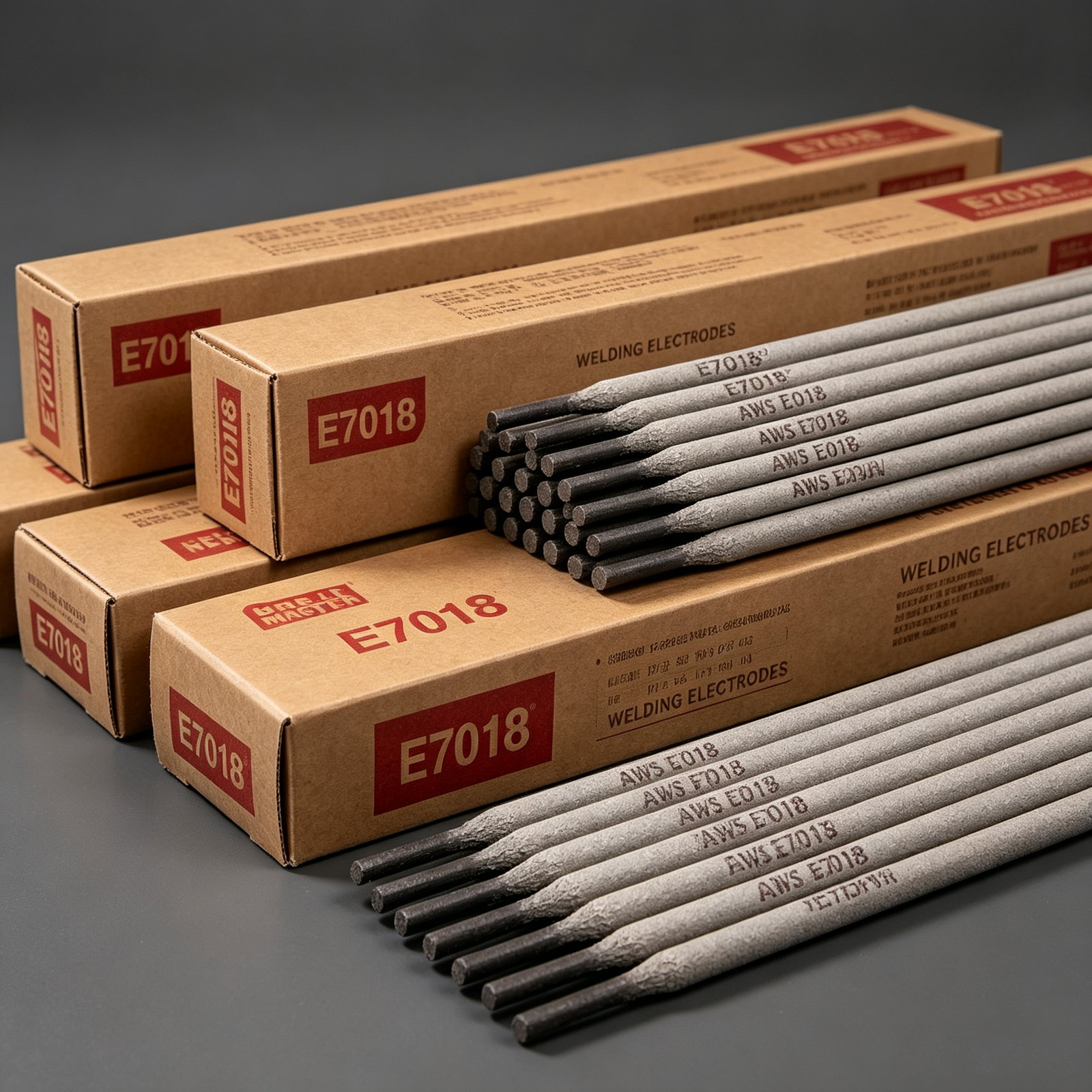
E7018 Low-Hydrogen Welding Electrode
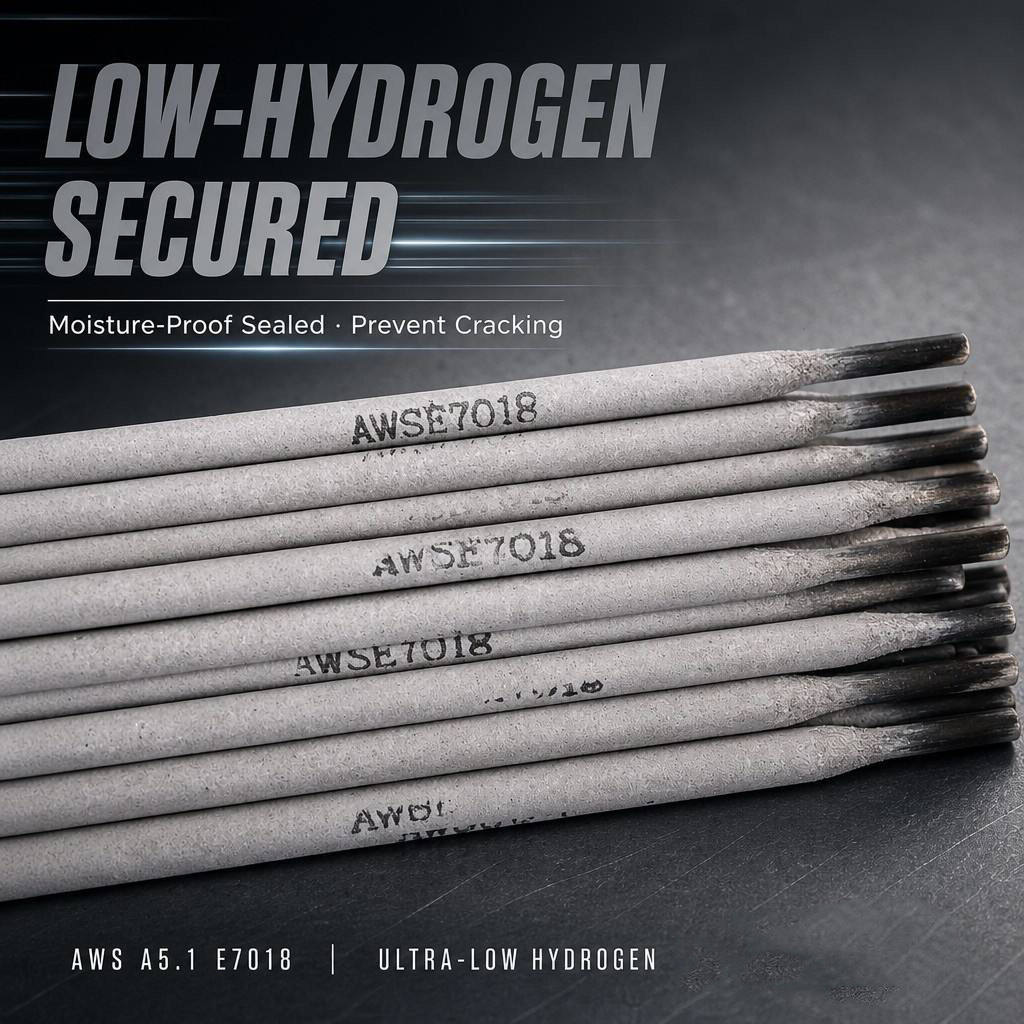
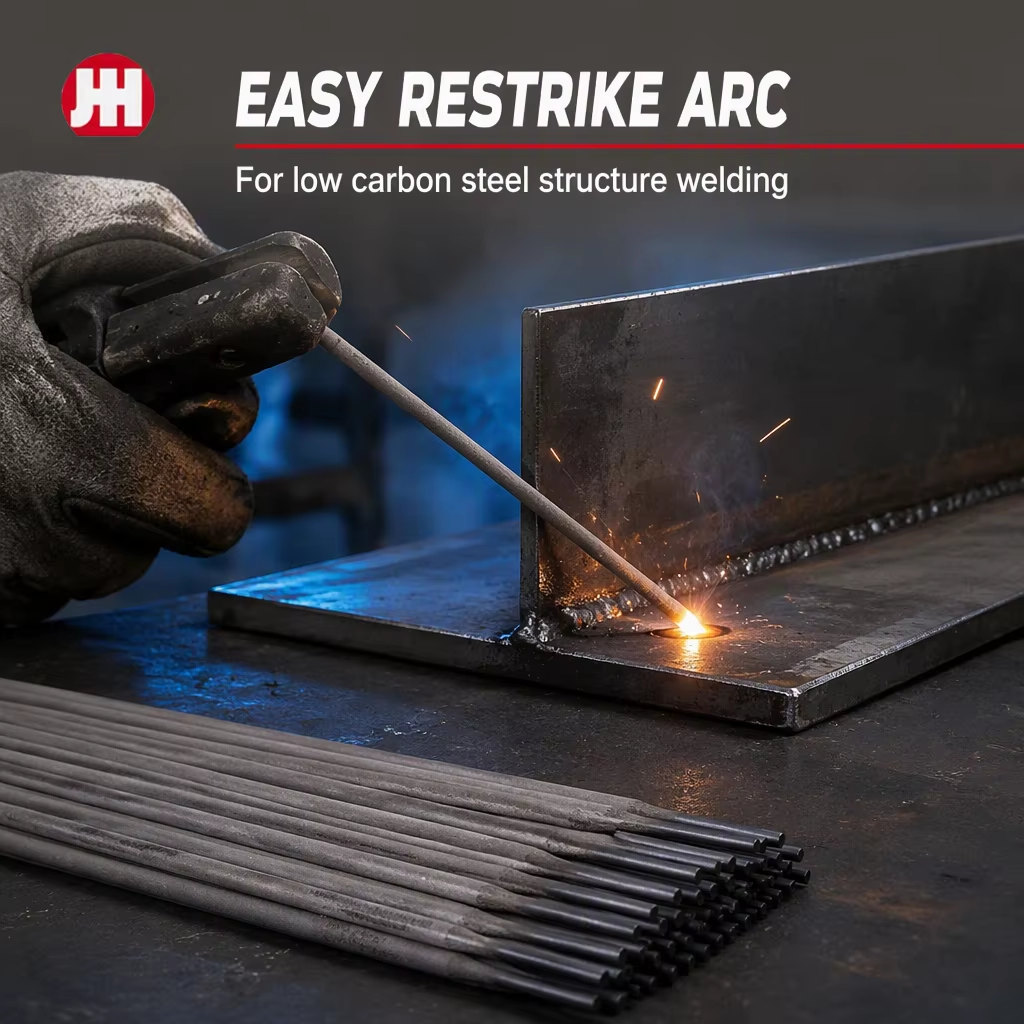
E7018 is a low-hydrogen iron powder electrode supplied to AWS A5.1 for low-carbon steel structures, with a minimum tensile strength of 70 ksi. The iron powder in the coating raises deposition rate, and the low-hydrogen coating keeps diffusible hydrogen out of the weld, which is the reason it is specified on restraint-heavy joints. It is stocked in 2.0 mm through 5.0 mm.
Status
Datasheet available on request
Description
Low-hydrogen iron powder electrode.
Welding positions, current range, deposition data and procedure notes are provided with the datasheet. Ask us for the grade you are specifying.
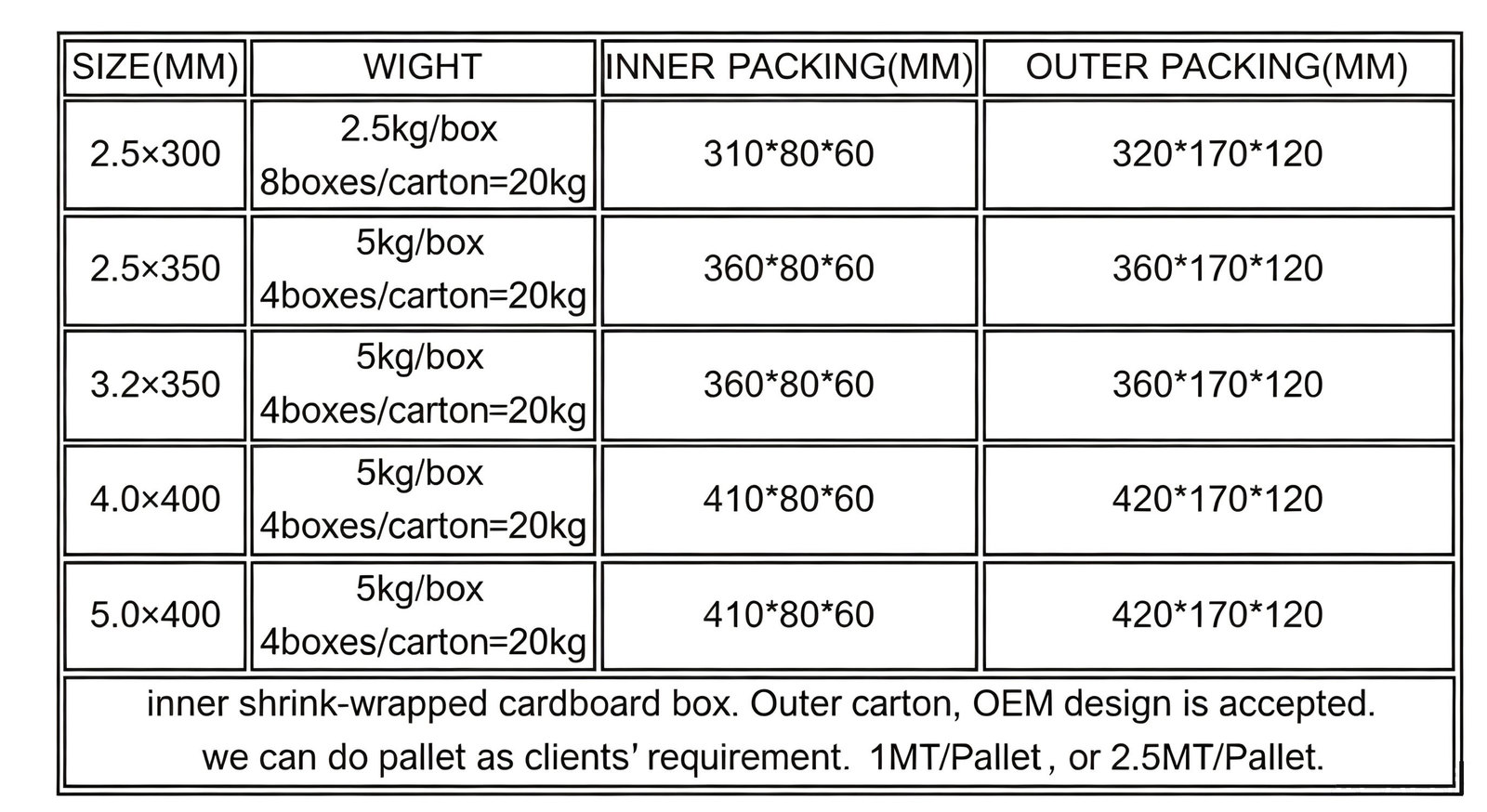
- Packing
- 5kg/box
- Standard
- AWS A5.1 (E7018)
- Application
- Low Carbon Steel Structure
- Material
- Carbon Steel
- Form / model
- 2.0mm 2.5mm 3.2mm 4.0mm 5.0mm
- MOQ
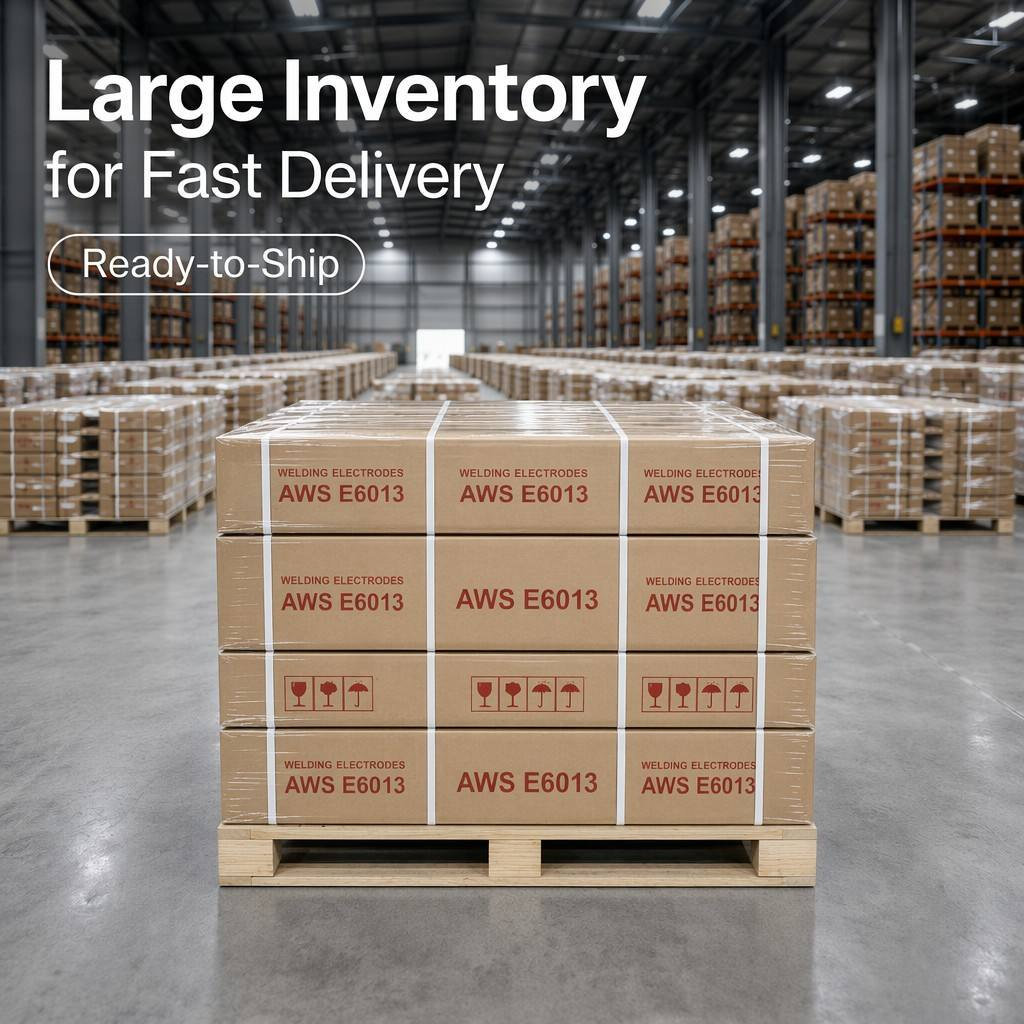
- 2 Tons
- Selling unit
- Single item
- Single gross weight
- 2.1 kg
- Single package size
- 40X10X10 cm
Lead time
- 1 - 2,000
- 7 days
- 2,001 - 3,000
- 14 days
- > 3,000
- To be negotiated days
What does the 8 in E7018 mean?
It states two things at once under AWS A5.1: a low-hydrogen coating, and iron powder in that coating, usable on alternating or direct current. The low hydrogen limits what the arc puts into the weld metal; the iron powder becomes part of the deposit and raises how much metal goes down per arc-hour.
Can E7018 be used on AC?
Yes. Unlike E7015, which is a direct-current electrode, E7018 will run on alternating current as well as DC. That is one of the reasons it is the default low-hydrogen grade on sites where the machine might be either, and one of the reasons E7015 is bought only where DC is guaranteed.
What happens if E7018 electrodes get damp?
The coating absorbs moisture and the electrode stops being low hydrogen in any useful sense. Hydrogen dissolved in the weld metal diffuses after cooling and can cause cracking hours or days later, especially in thick or restrained joints. Re-dry to the temperature on the grade datasheet, and keep them in a holding oven once the pack is open.
Is E7018 the same as E7018-1?
No, and the difference is a requirement on impact toughness at low temperature rather than on strength. Both are quoted as E7018-family electrodes in this catalogue and the exact suffix is fixed at order. If your procedure names E7018-1, say so in the enquiry so the certificate matches what was specified.
Are you a manufacturer or a trading company?
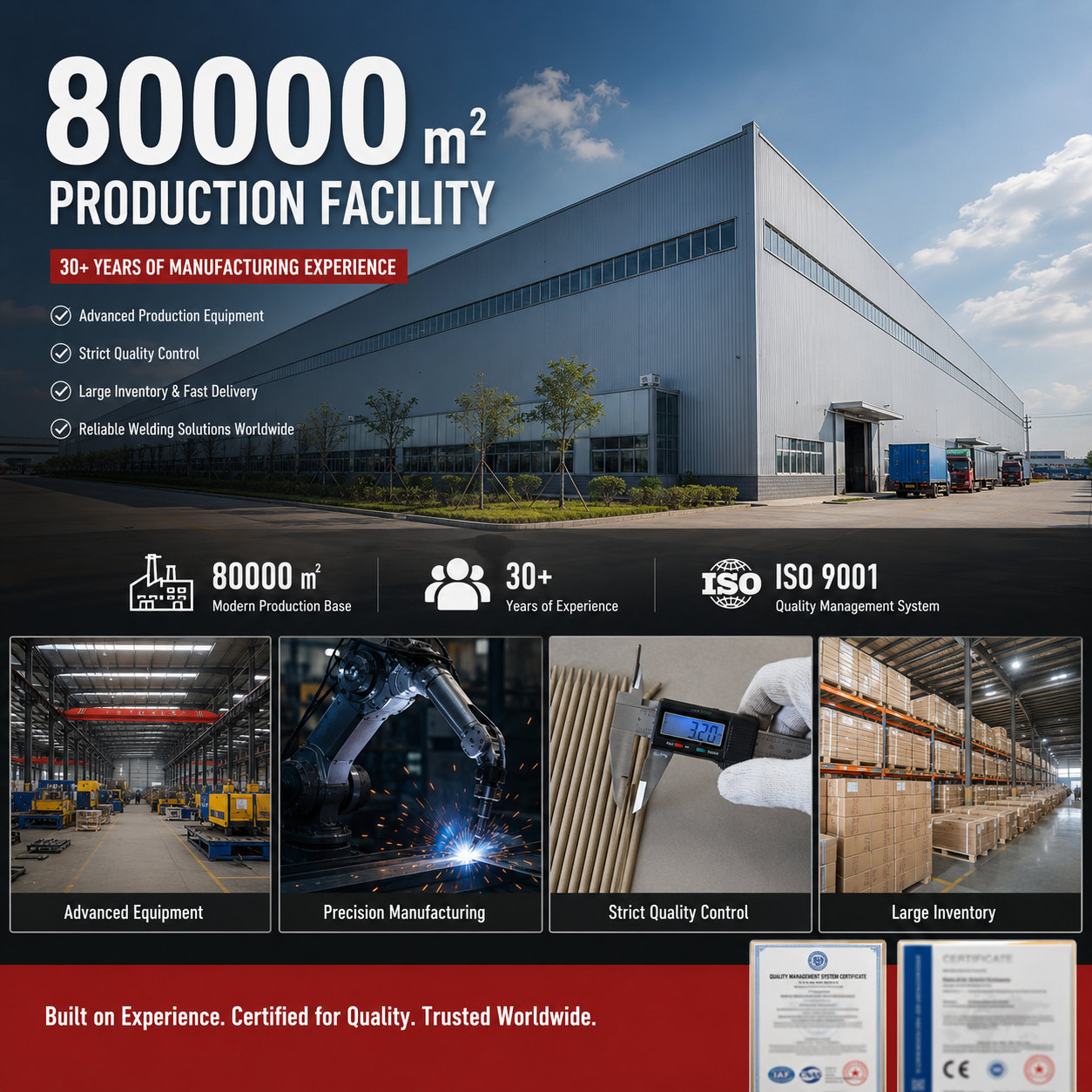
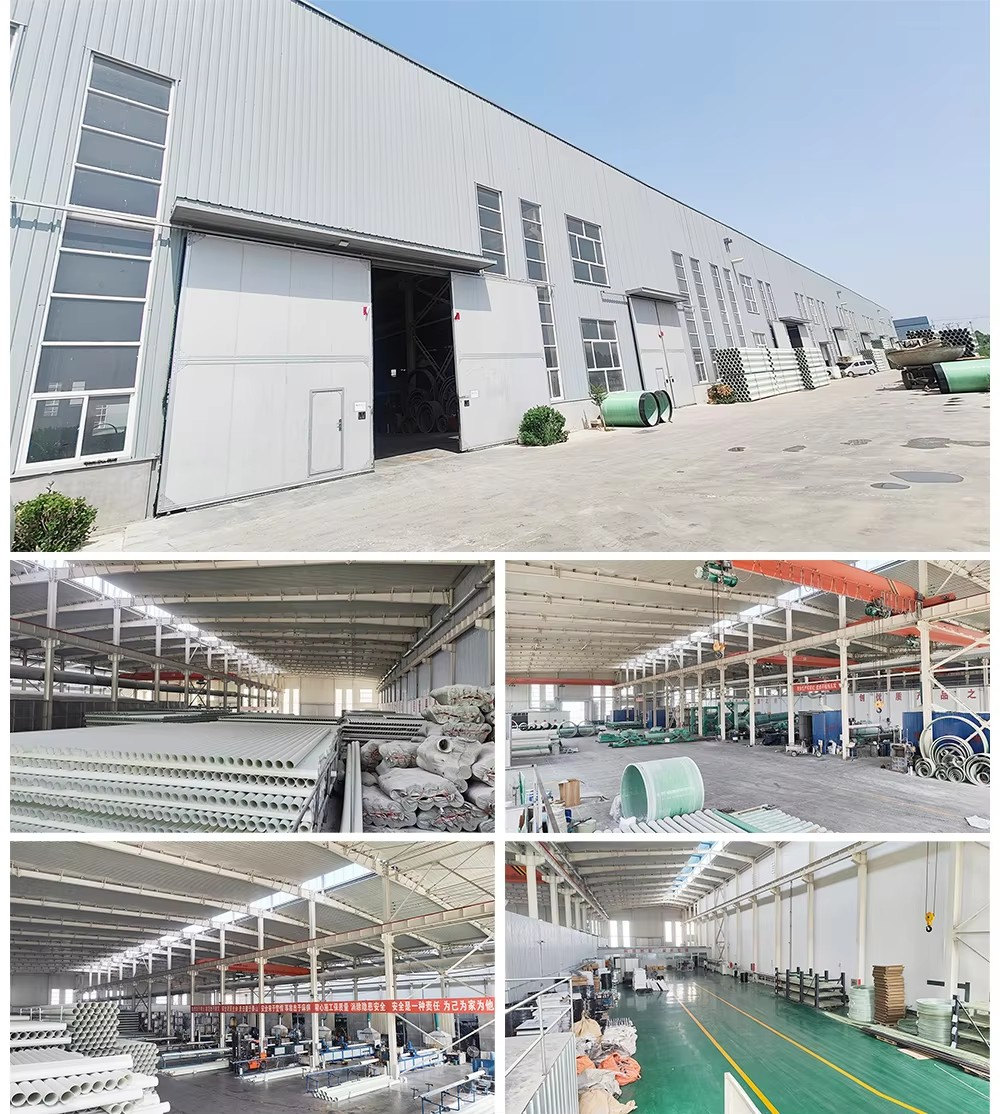
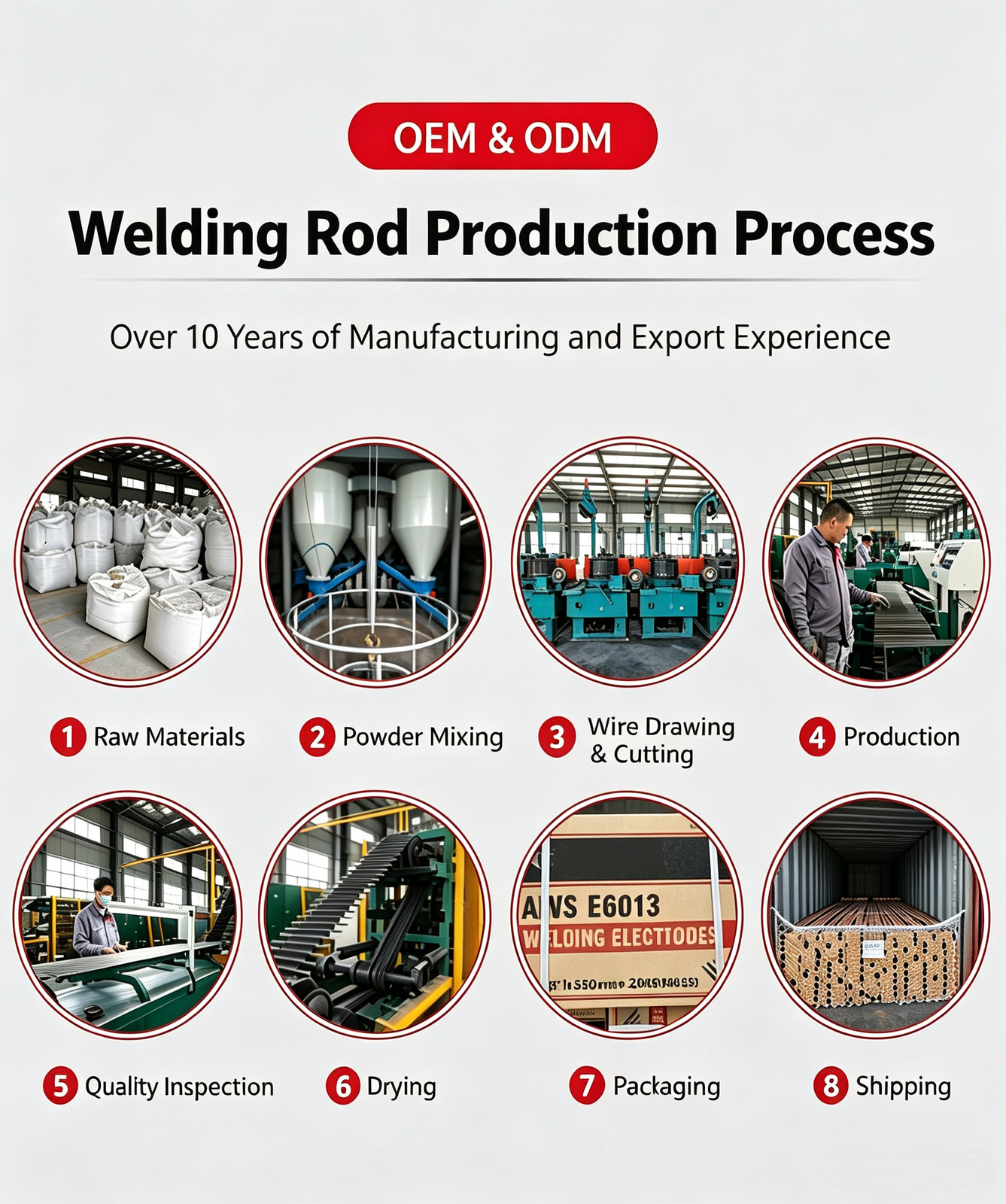
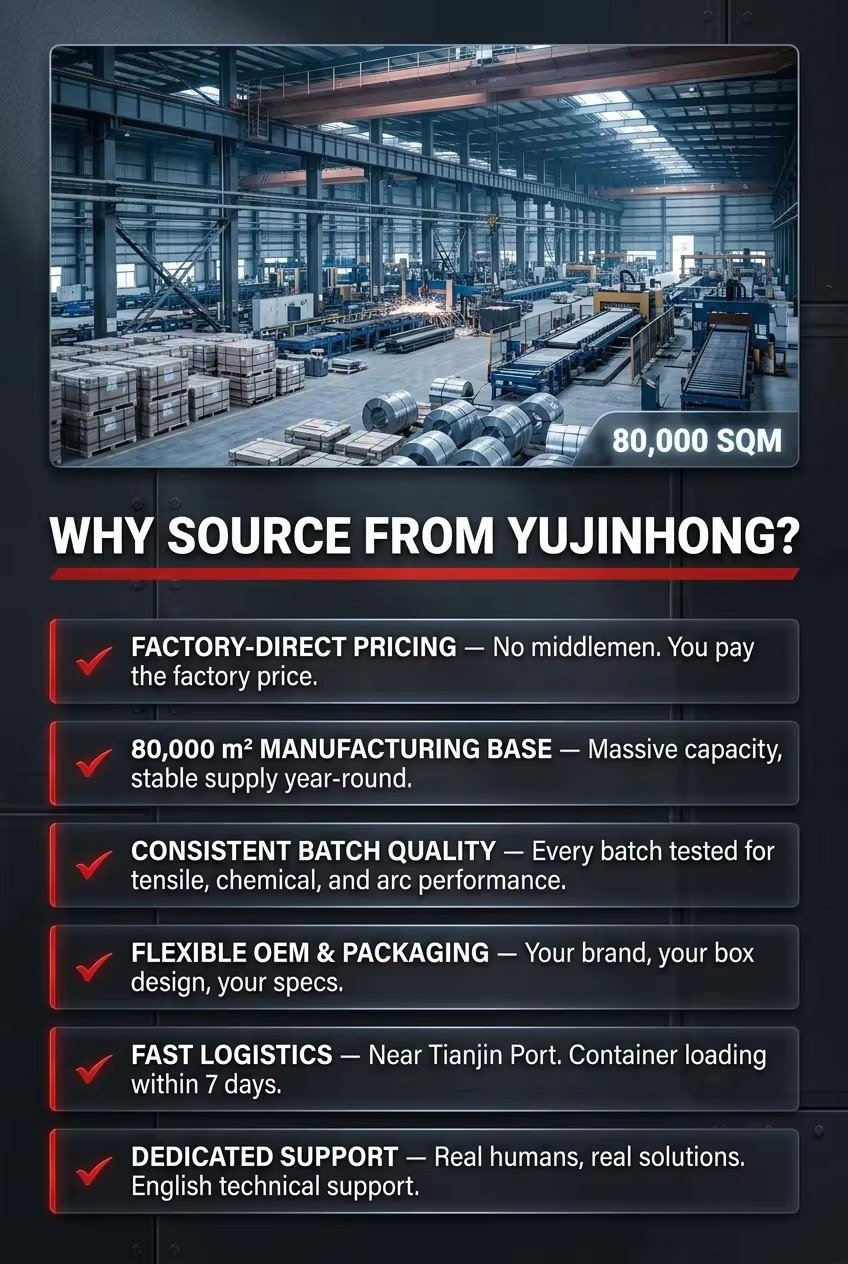
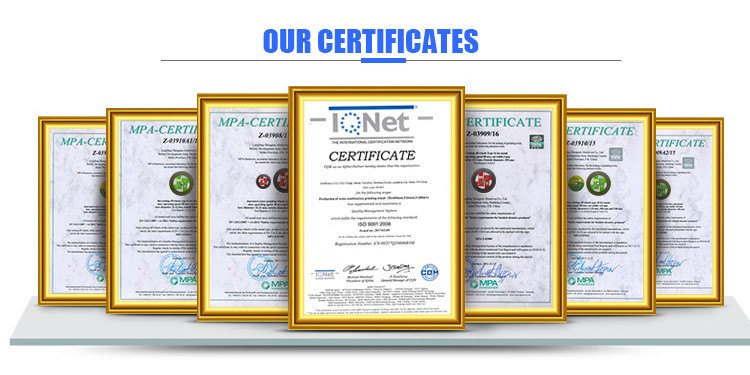
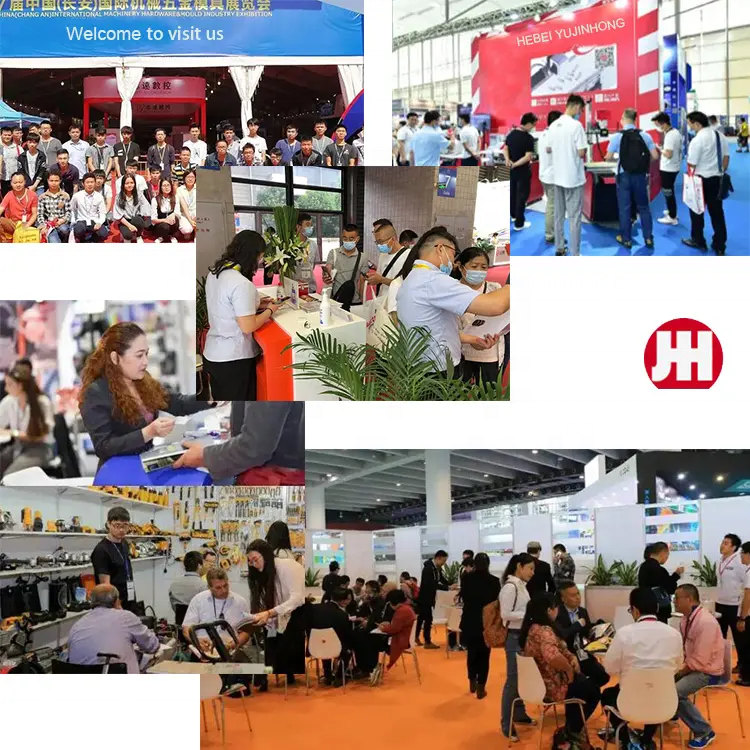
We are a professional manufacturer specializing in welding consumables since 1996. We have our own production lines and strict quality control systems to ensure premium quality at competitive factory prices.
What is the difference between E6013 and E7018?
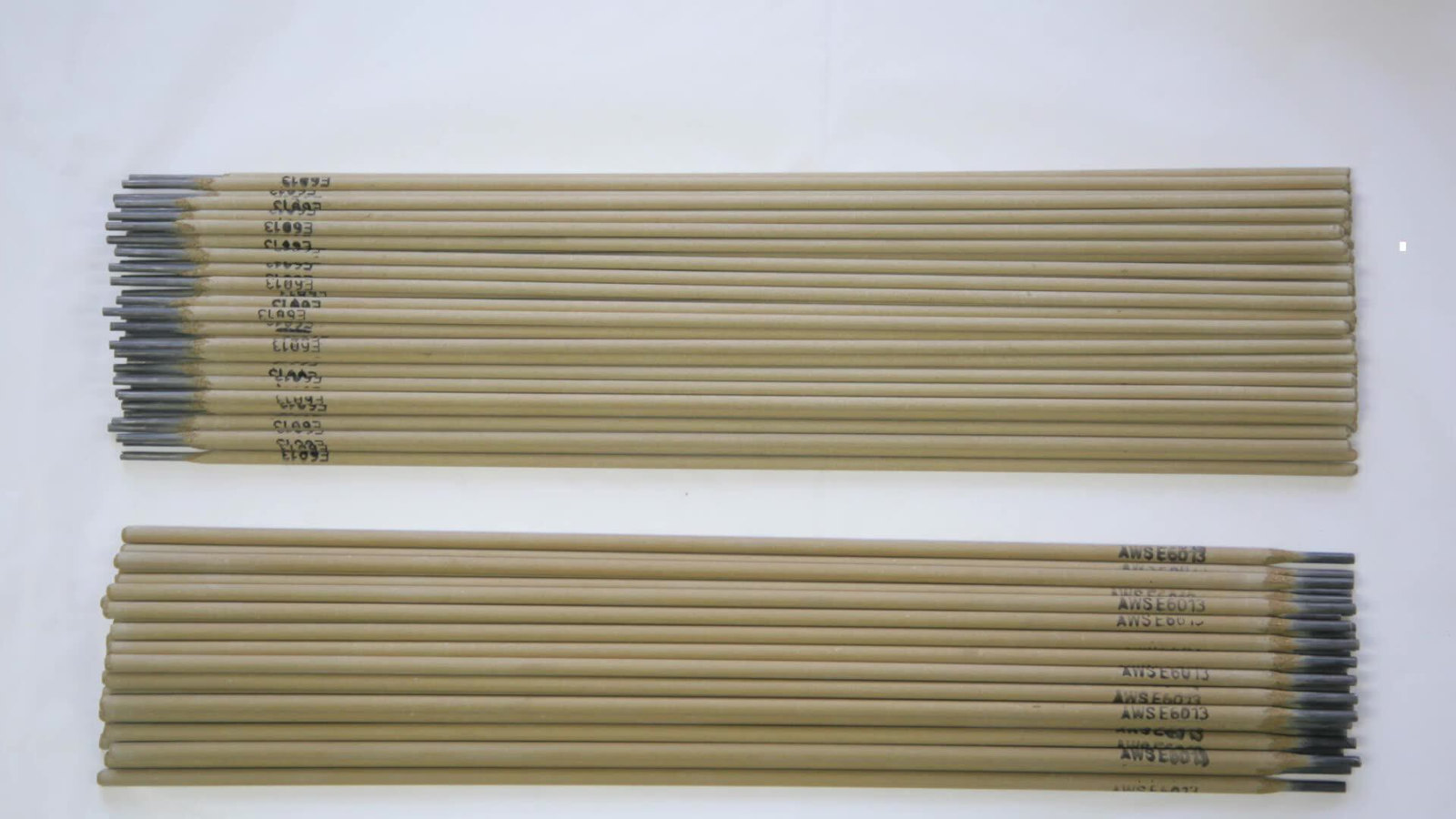
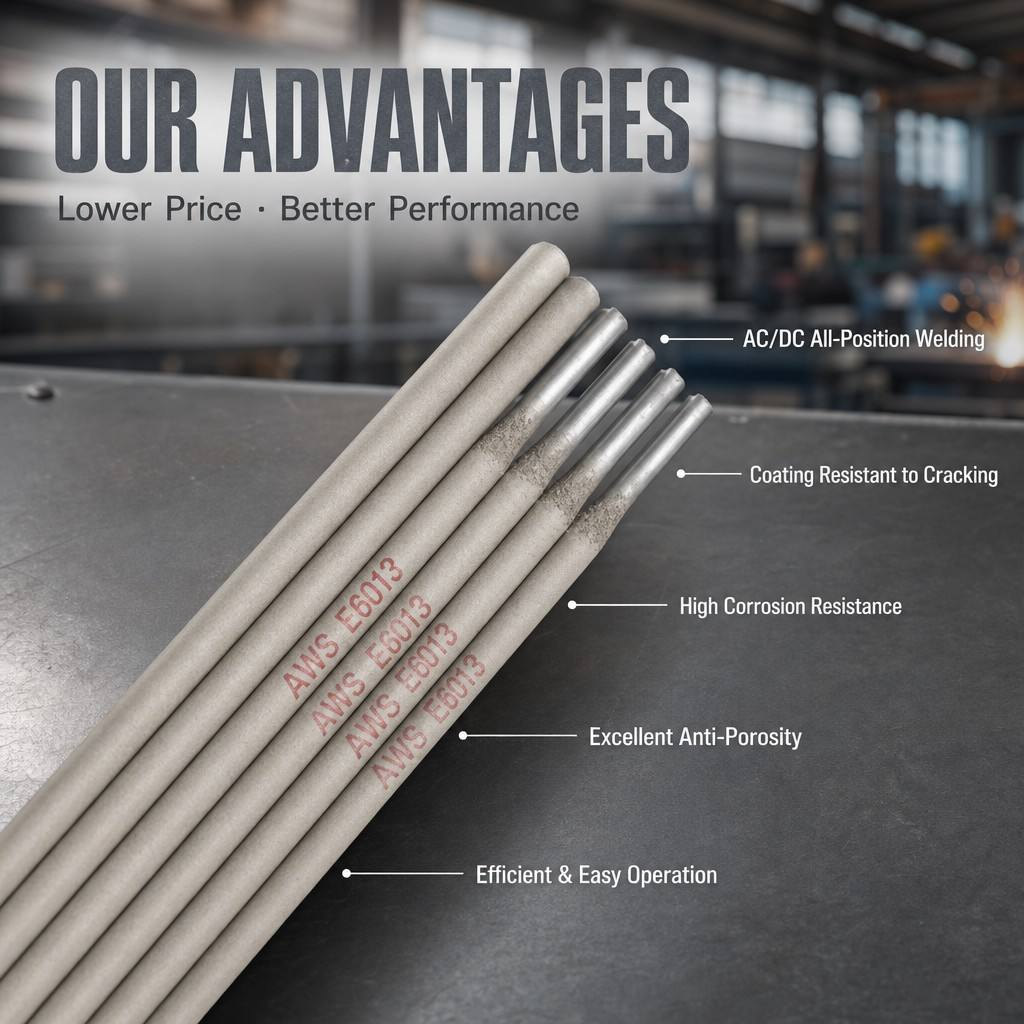
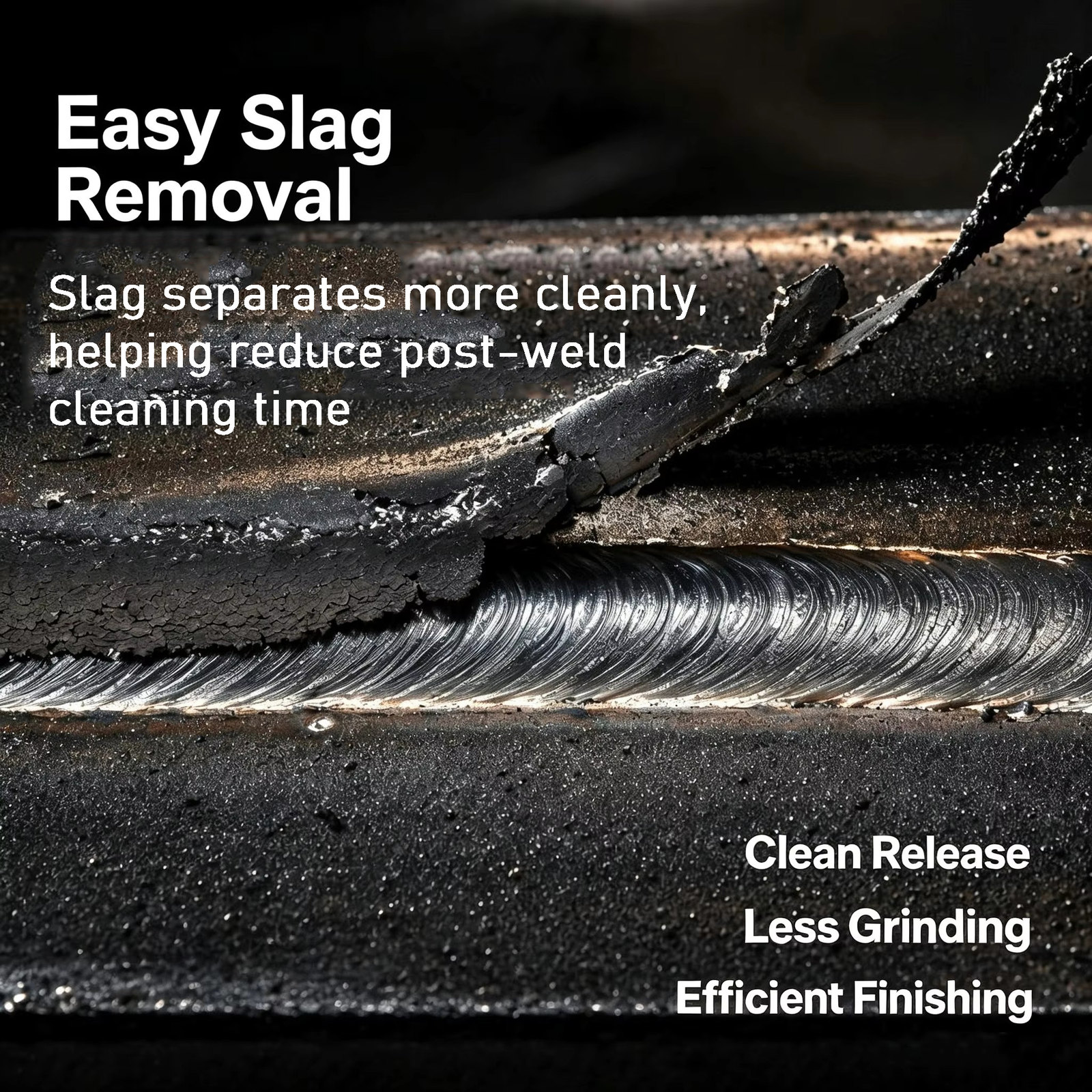
E6013 is a rutile-based general-purpose rod, ideal for thin plates and easy slag removal. E7018 is a low-hydrogen potassium rod with high tensile strength, designed for heavy structures and critical welds requiring X-ray quality.
Which electrode is best for rusty or dirty metal surfaces?
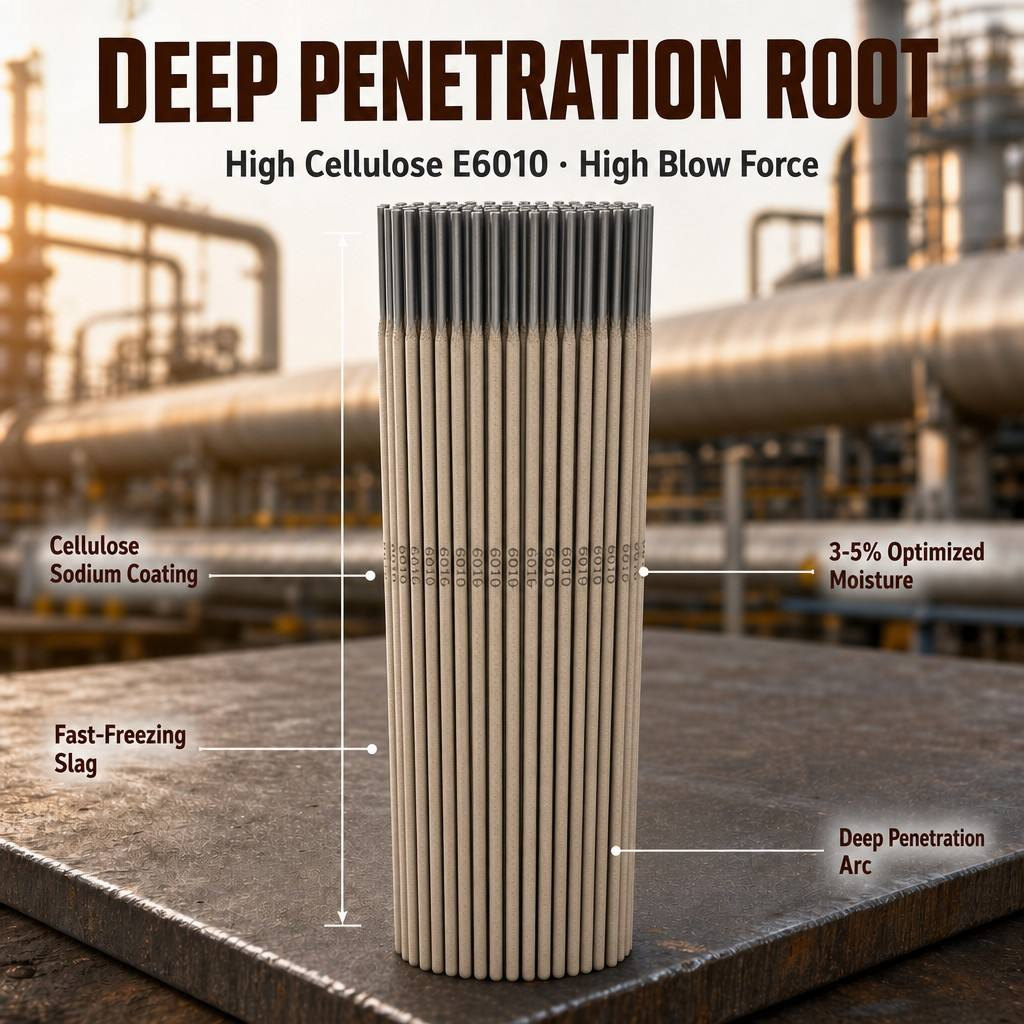
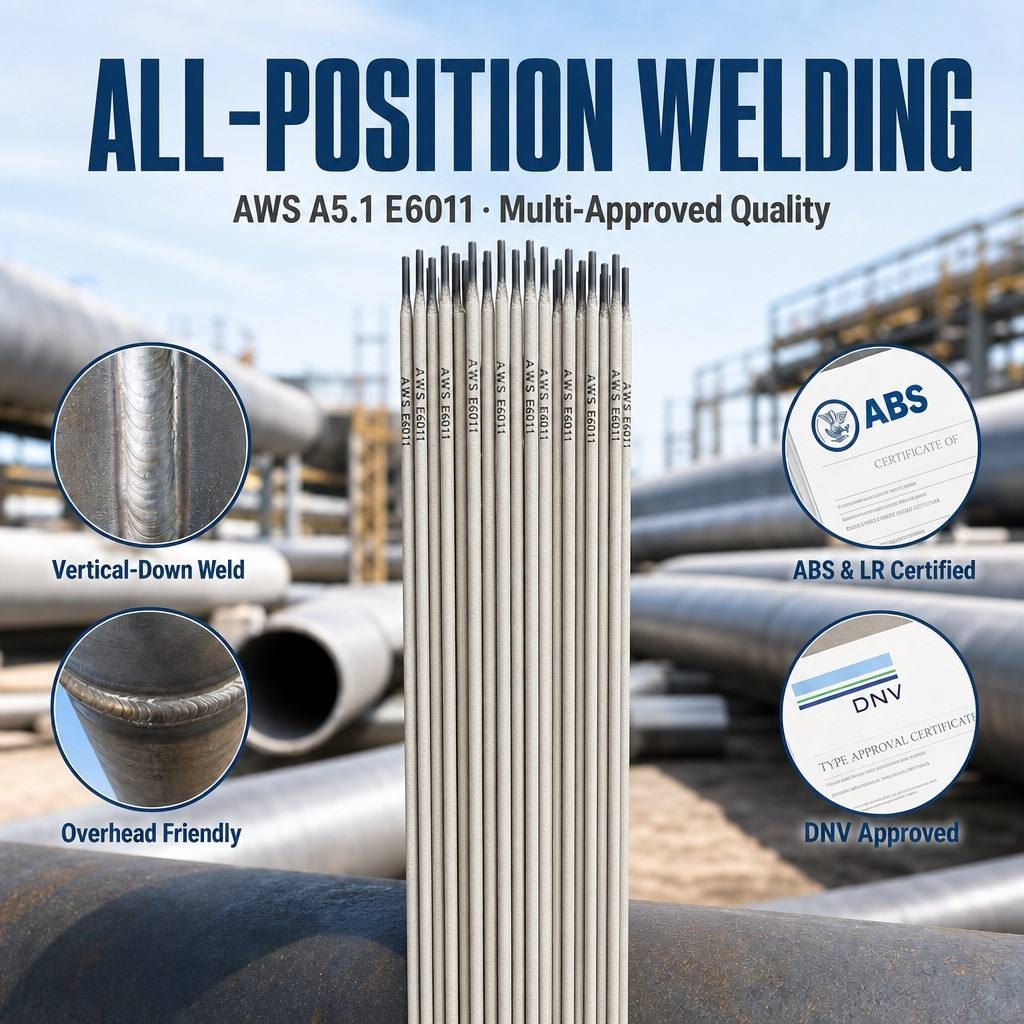
AWS E6010 or E6011 are the best choices. Their high cellulose coating provides a strong, deep-penetrating arc that can cut through rust, oil, and paint.
How do you ensure consistent quality across batches?
Every production batch undergoes: Chemical composition analysis (spectrometer), Tensile & yield strength testing. Arc performance & spatter evaluation, Slag removal & bead appearance inspection. Third-party inspection available upon request.
E7018 Low-Hydrogen Welding Electrode
Reading E7018
E7018 is an AWS A5.1 electrode. The 70 is minimum tensile strength in ksi, the 1 states all-position usability, and the 18 states a low-hydrogen coating with iron powder added, usable on alternating or direct current.
The 8 is doing two jobs at once, and buyers tend to remember only one of them. Low hydrogen is the metallurgical half: the coating is formulated so that the arc introduces very little hydrogen into the weld metal. Iron powder is the productivity half: the coating contains iron that becomes part of the deposit, so more metal goes into the joint for the same arc time.
Why low hydrogen matters at all
Hydrogen dissolved in weld metal is a delayed problem. It diffuses through the deposit after the weld has cooled, collects at discontinuities, and can cause cracking hours or days later, under load or under restraint. Thick sections, restrained joints and steels that harden in the heat-affected zone are where it shows up first.
A low-hydrogen coating reduces the amount that gets in. It does not remove the need to keep the electrode dry. A coating that has absorbed moisture from the air is no longer low hydrogen in any useful sense, and the joint would have been better served by a rutile electrode than by a damp one that looks like the right grade.
Where it belongs
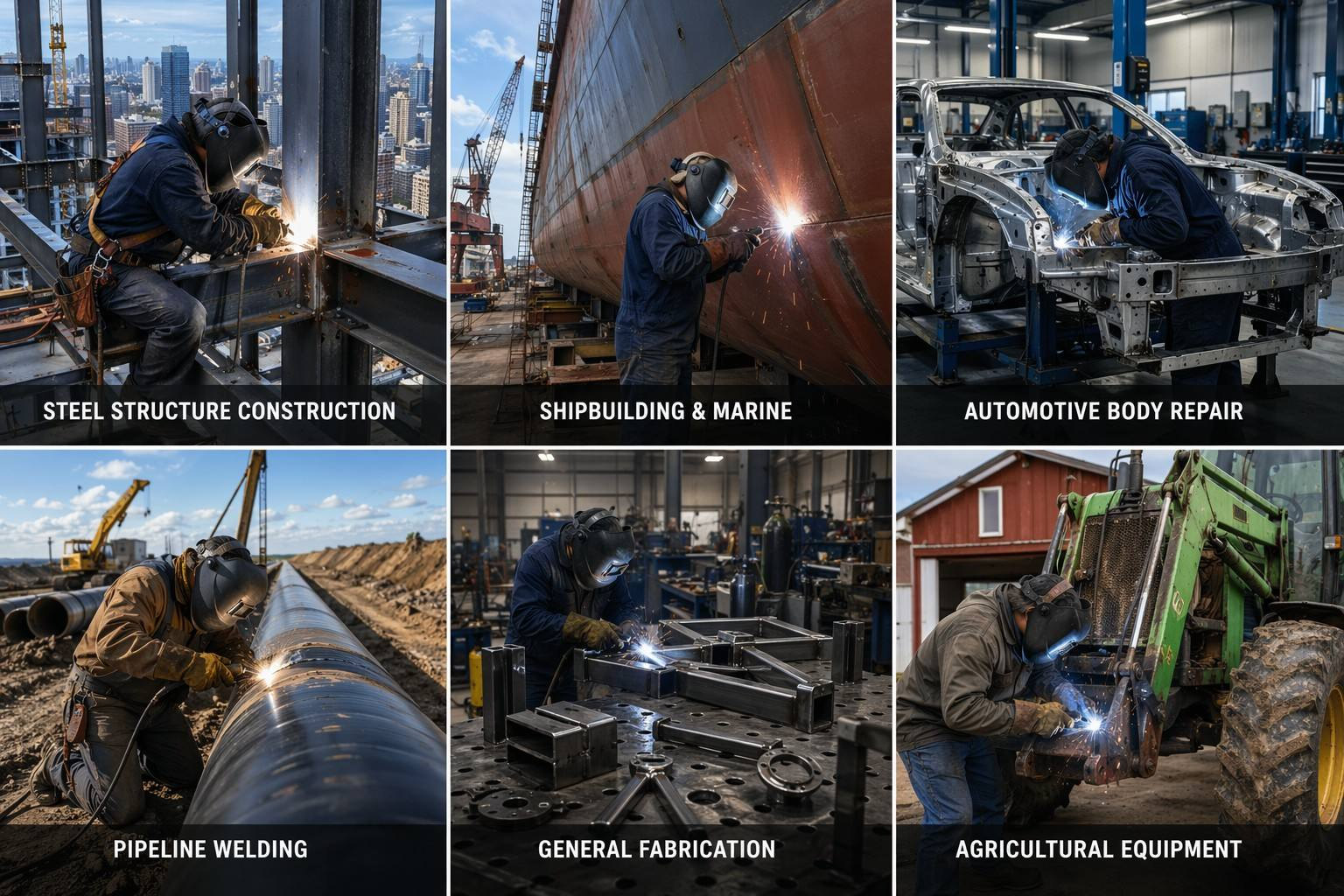
- Structural steel where the joint is restrained and the section is thick enough for hydrogen cracking to be a real risk.
- Work governed by a procedure that names a low-hydrogen electrode, which is most structural codes.
- Fill and cap passes on plate where deposition rate is the cost driver, because the iron powder puts down more metal per arc-hour than a plain low-hydrogen coating.
- Not the first choice for thin sheet, where a rutile electrode is easier to run and the hydrogen question does not arise.
Storage decides whether you bought E7018
Keep the electrodes in sealed packaging until the moment of use, and then in a holding oven if they will be out for a shift. Re-dry to the temperature stated on the grade datasheet. We deliberately do not print a figure here: it differs between coatings, and a number copied from another product is worse than no number at all. Ask for the datasheet with the quotation and the figure will be the one for the electrode you receive.
Choosing between the low-hydrogen grades
E7018 is one of three low-hydrogen grades in this catalogue, alongside E7016 and E7015. E7015 needs direct current. E7016 runs on AC or DC and restarts more easily. E7018 adds the iron powder. If the machine is AC, the choice narrows immediately.
Electrode Diameter: What 2.5, 3.2 and 4.0 mm Actually Change
Diameter is not a preference. It decides how much current the rod needs, which positions it will hold, and how many passes a joint takes. What each common size is good for, and where it stops working.
Read the guideBase Metal to Filler Metal: A Matching Table
The first decision in any welding job is which filler matches the base metal. A table of the common base metals against the grades that fit them, including the pairs where no single filler is correct.
Read the guideAWS A5.1, A5.5, A5.4 and A5.9: Which Standard Covers What
Four AWS standards cover most of the welding consumables sold in bulk, and buyers mix them up when they compare quotes. What each one governs, and how to tell from a designation which one applies.
Read the guideE7018 vs E7016 vs E7015: Picking Between the Low-Hydrogen Three
Three low-hydrogen 70 ksi electrodes that look interchangeable and are not. The last digit of the designation states the coating and the current, and that decides which one your machine can actually run.
Read the guideE6010 vs E6011 vs E7018: Choosing a Stick Electrode
What an AWS A5.1 grade tells you, why cellulosic and low-hydrogen coatings differ so much, and which of the three suits root passes and vertical-down work.
Read the guideOther grades in this family
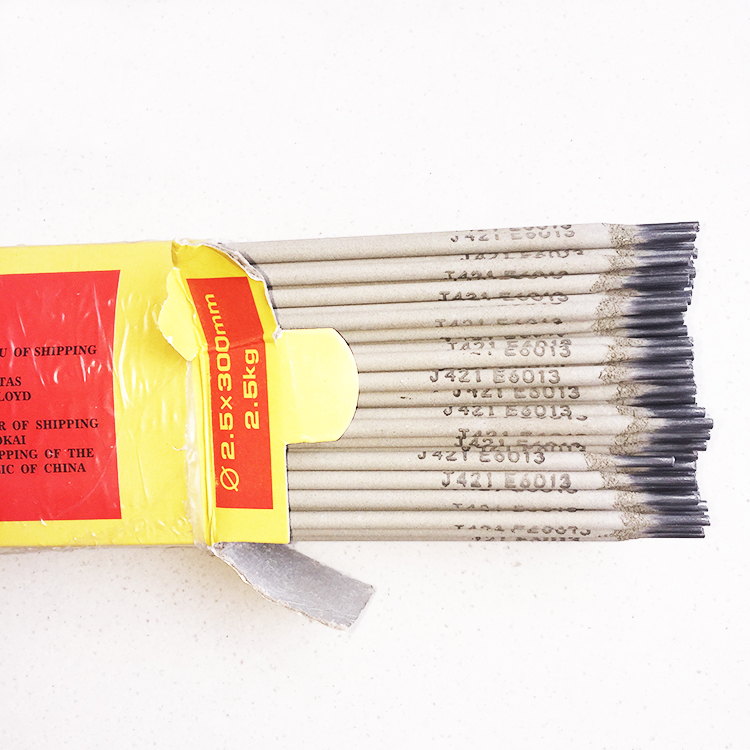
E7024 Iron Powder Welding Electrode
Iron powder electrode for flat, high-deposition work.
View grade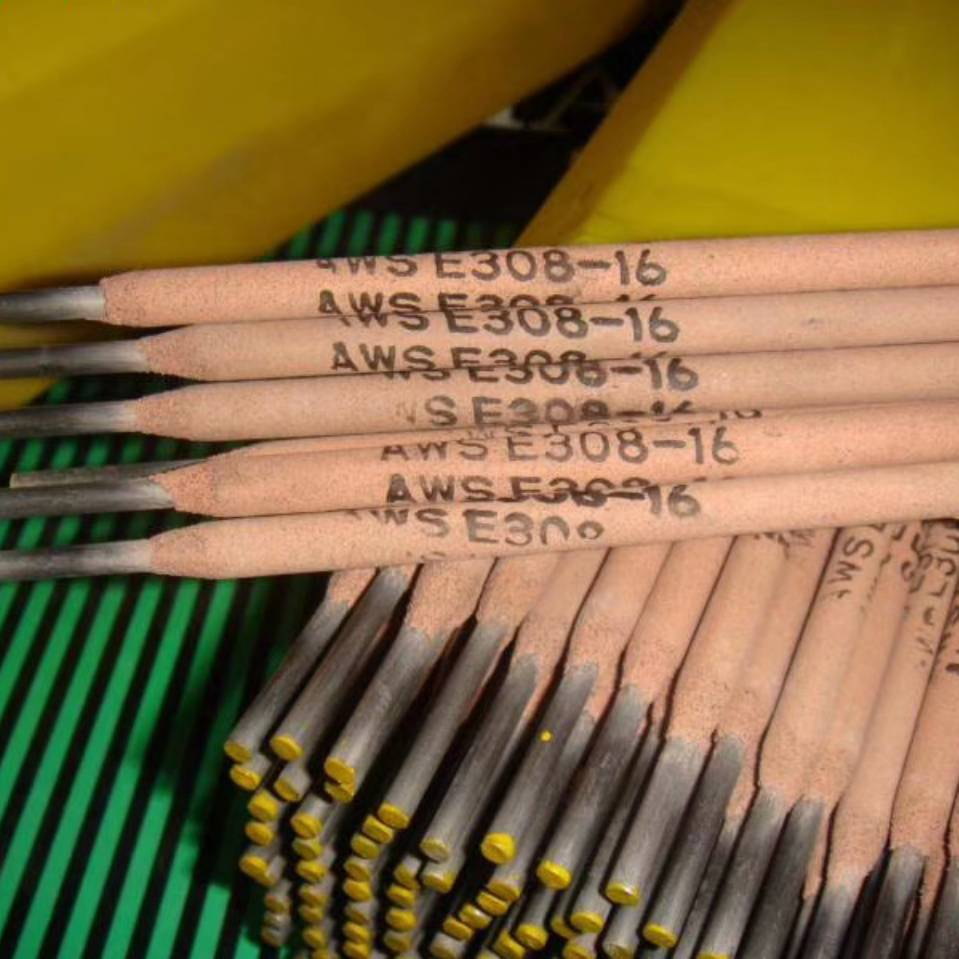
E7028 Iron Powder Low-Hydrogen Electrode
Iron powder low-hydrogen electrode.
View grade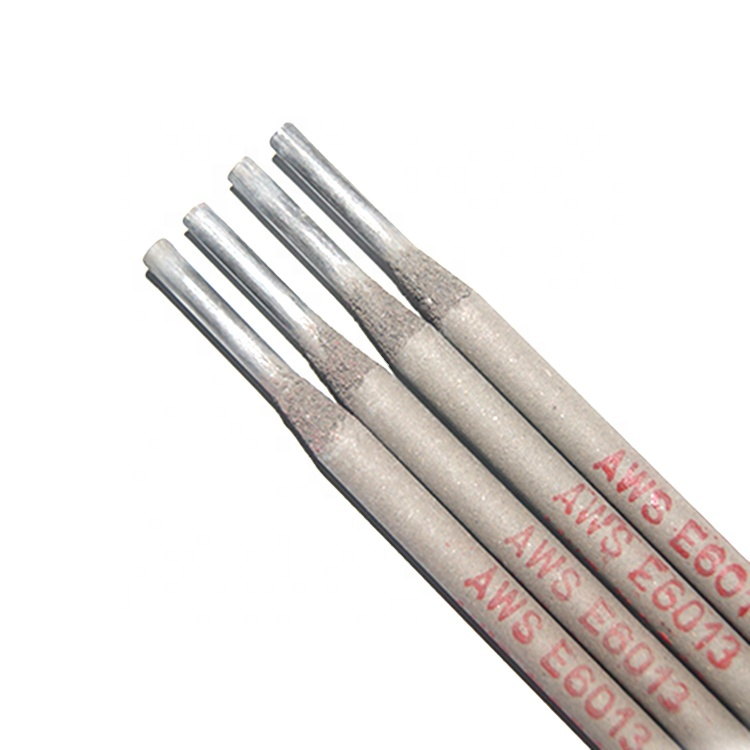
E8010 High-Strength Cellulosic Electrode
High-strength cellulosic pipeline electrode.
View grade
E8018 High-Strength Low-Hydrogen Electrode
Low-hydrogen high-strength electrode.
View gradeE9010 High-Strength Cellulosic Electrode
High-strength cellulosic pipeline electrode.
View grade
E9018 High-Strength Low-Hydrogen Electrode
Low-hydrogen high-strength iron powder electrode.
View grade